
Iran, BP and the risks of strategic shifts
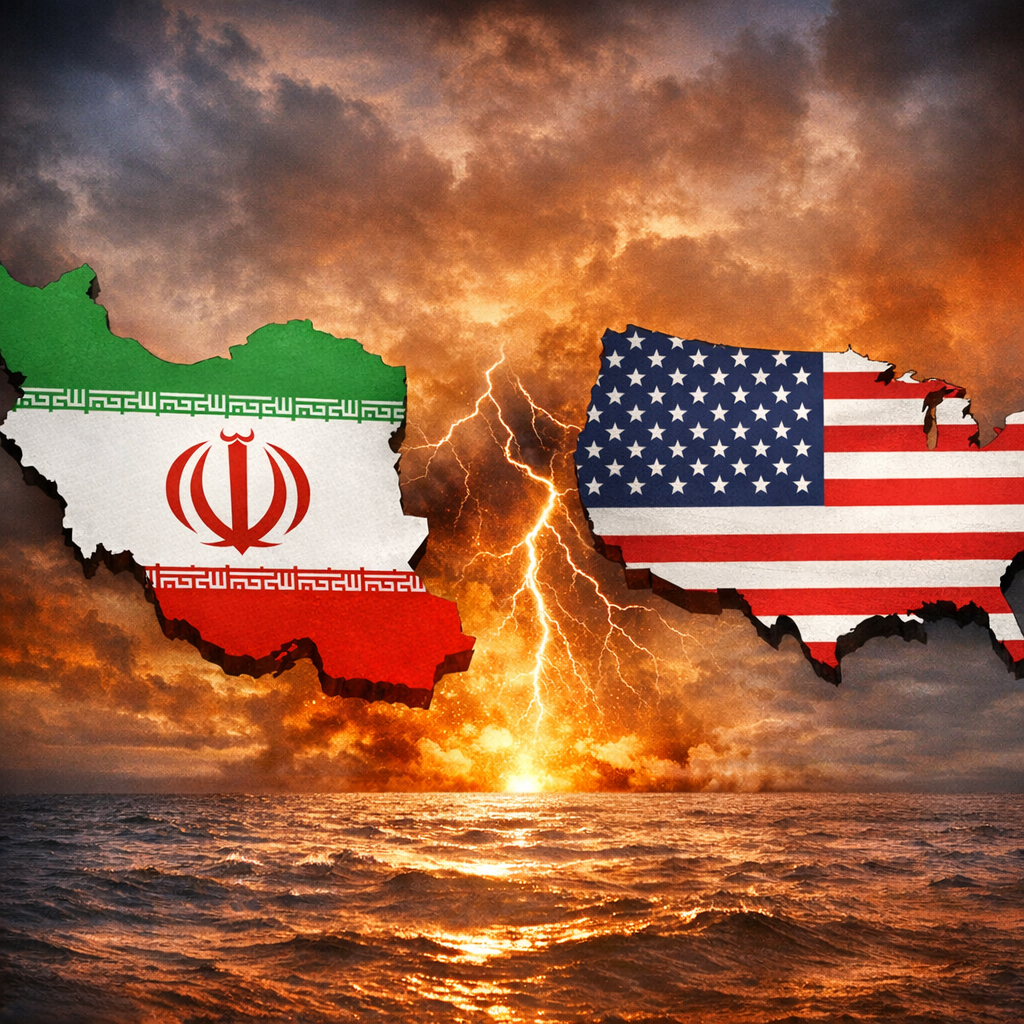
The renewed confrontation involving Iran has once again exposed the fragility of global energy security. Heightened risks around the Gulf of Hormuz, periodic attacks on critical infrastructure across the Middle East, and growing uncertainty over the uninterrupted flow of oil and gas have rattled markets. For energy dependent economies such as India, China and Japan, the implications stretch beyond geopolitics to inflation control, fiscal balances and currency stability.
The International Energy Agency has cautioned that the current environment represents one of the most acute energy security stresses in recent decades. Physical supply disruptions, risk premiums increase, Insurance costs, freight rates and LNG spot prices have all responded to heightened uncertainty.
The International Energy Agency has cautioned that the current environment represents one of the most acute energy security stresses in recent decades. Physical supply disruptions, risk premiums increase, Insurance costs, freight rates and LNG spot prices have all responded to heightened uncertainty.
This raises a broader and more enduring question: how did the world drift back into a confrontation that policymakers only a decade ago sought to stabilise — and what lessons does this hold beyond geopolitics?
Sudden shifts in policy or corporate strategy may signal decisiveness, but without continuity and sequencing they often sow instability — in energy markets, boardrooms and geopolitics alike
Strategy without continuity
For decades after the 1979 Iranian revolution, relations between Tehran and Washington were defined by suspicion, particularly over Iran’s nuclear programme. Economic sanctions — especially on oil exports and financial transactions — became the primary tool of containment.
A partial stabilisation emerged in 2015 with the Joint Comprehensive Plan of Action (JCPOA). The agreement was neither comprehensive nor permanent, but it introduced inspection mechanisms, capped enrichment activity and reduced escalation risk. It functioned as a set of guardrails rather than a final settlement.
That framework ended abruptly in 2018 when the Trump administration withdrew unilaterally from the deal. The decision reflected a broader preference for breaking with multilateral agreements negotiated by predecessors. However, in the case of Iran, the withdrawal dismantled an existing containment structure without replacing it with a credible alternative.
The consequences were predictable. Iran accelerated nuclear enrichment, hardline factions gained influence domestically, and regional proxy conflicts intensified. By the time the Biden administration sought to revive negotiations, the strategic context had shifted. Capabilities had advanced, trust had eroded and regional deterrence mechanisms had weakened.
Today’s escalation cannot be attributed to a single decision or actor. Iran’s domestic politics, regional rivalries and the actions of nonstate groups all play an important role. Yet it is difficult to argue that the loss of continuity in US policy did not materially increase systemic risk.
A partial stabilisation emerged in 2015 with the Joint Comprehensive Plan of Action (JCPOA). The agreement was neither comprehensive nor permanent, but it introduced inspection mechanisms, capped enrichment activity and reduced escalation risk. It functioned as a set of guardrails rather than a final settlement.
That framework ended abruptly in 2018 when the Trump administration withdrew unilaterally from the deal. The decision reflected a broader preference for breaking with multilateral agreements negotiated by predecessors. However, in the case of Iran, the withdrawal dismantled an existing containment structure without replacing it with a credible alternative.
The consequences were predictable. Iran accelerated nuclear enrichment, hardline factions gained influence domestically, and regional proxy conflicts intensified. By the time the Biden administration sought to revive negotiations, the strategic context had shifted. Capabilities had advanced, trust had eroded and regional deterrence mechanisms had weakened.
Today’s escalation cannot be attributed to a single decision or actor. Iran’s domestic politics, regional rivalries and the actions of nonstate groups all play an important role. Yet it is difficult to argue that the loss of continuity in US policy did not materially increase systemic risk.
A corporate parallel
British Petroleum strategy reversal
The consequences of abrupt strategic reversals are not confined to geopolitics. Corporate history offers comparable lessons, particularly in capital intensive industries.
British Petroleum provides a useful case study. Long regarded as one of the world’s most operationally disciplined energy companies, BP’s strengths lay not only in asset scale but in systems, safety culture and capital management.
British Petroleum provides a useful case study. Long regarded as one of the world’s most operationally disciplined energy companies, BP’s strengths lay not only in asset scale but in systems, safety culture and capital management.

In 2020, under chief executive Bernard Looney, BP announced one of the most aggressive pivots among oil majors towards renewables and low-carbon energy. The shift involved significant divestments, including its petrochemicals business — historically one of BP’s most resilient cash generators.
The strategic logic aligned with prevailing investor sentiment, particularly in Europe, where pressure to demonstrate leadership on climate issues had intensified. But execution proved challenging. Global oil and gas demand remained resilient, renewable returns lagged expectations, and BP’s free cash flow underperformed peers that pursued more incremental transition strategies.
Leadership instability following Looney’s departure compounded the problem. Although BP has since recalibrate under new management — reemphasising capital discipline and selectively refocusing on hydrocarbons — the episode illustrates how credibility can be damaged by front loaded strategic reversals.
The issue was not energy transition itself. Rather, it was the abandonment of sequencing and optionality.
The strategic logic aligned with prevailing investor sentiment, particularly in Europe, where pressure to demonstrate leadership on climate issues had intensified. But execution proved challenging. Global oil and gas demand remained resilient, renewable returns lagged expectations, and BP’s free cash flow underperformed peers that pursued more incremental transition strategies.
Leadership instability following Looney’s departure compounded the problem. Although BP has since recalibrate under new management — reemphasising capital discipline and selectively refocusing on hydrocarbons — the episode illustrates how credibility can be damaged by front loaded strategic reversals.
The issue was not energy transition itself. Rather, it was the abandonment of sequencing and optionality.
Change versus disruption
Not all strategic change is destabilising. Indeed, in many cases it is essential. But successful transitions share common characteristics: protection of legacy cash flows, gradual capability building and institutional continuity.
Reliance Industries’ long diversification from hydrocarbons into retail, telecommunications and digital services offers a contrast. The company expanded into new sectors while preserving the financial strength and execution discipline of its core businesses. Change was cumulative, not declarative.
Problems arise when strategic resets are driven primarily by leadership transitions rather than institutional consensus. New leaders often face strong incentives to signal differentiation from predecessors. Markets and adversaries, however, reward credibility over novelty.
Reliance Industries’ long diversification from hydrocarbons into retail, telecommunications and digital services offers a contrast. The company expanded into new sectors while preserving the financial strength and execution discipline of its core businesses. Change was cumulative, not declarative.
Problems arise when strategic resets are driven primarily by leadership transitions rather than institutional consensus. New leaders often face strong incentives to signal differentiation from predecessors. Markets and adversaries, however, reward credibility over novelty.
Both BP’s experience and US policy towards Iran suggest that abrupt change without implementation depth tends to weaken control rather than strengthen it.
Assigning responsibility in complex systems requires care. The JCPOA was flawed and politically fragile. Iran’s subsequent actions were not inevitable responses to US withdrawal. Yet it is reasonable to conclude that dismantling an imperfect stabilising framework without constructing a viable successor materially increased longterm risk.
In both corporate and geopolitical settings, strategy is cumulative. Resetting direction may generate short term political or narrative clarity, but often at the expense of control over downstream consequences.
Assigning responsibility in complex systems requires care. The JCPOA was flawed and politically fragile. Iran’s subsequent actions were not inevitable responses to US withdrawal. Yet it is reasonable to conclude that dismantling an imperfect stabilising framework without constructing a viable successor materially increased longterm risk.
In both corporate and geopolitical settings, strategy is cumulative. Resetting direction may generate short term political or narrative clarity, but often at the expense of control over downstream consequences.
A lesson in stewardship
Leadership is frequently celebrated for boldness. Yet the harder task lies in stewardship — preserving what works while adapting cautiously to what must change.
As energy markets absorb the consequences of renewed geopolitical confrontation, the broader lesson is clear. Continuity is not complacency, and change is not virtue in itself. Without sequencing, institutional memory and execution discipline, strategy becomes fragile — whether in a corporate portfolio or the global order.
One can only hope that pragmatism reasserts itself, and that the current confrontation gives way to a framework that restores stability rather than repeats the cycle of disruption.
As energy markets absorb the consequences of renewed geopolitical confrontation, the broader lesson is clear. Continuity is not complacency, and change is not virtue in itself. Without sequencing, institutional memory and execution discipline, strategy becomes fragile — whether in a corporate portfolio or the global order.
One can only hope that pragmatism reasserts itself, and that the current confrontation gives way to a framework that restores stability rather than repeats the cycle of disruption.





I like your statement in the blog “Continuity is not complacency, and change is not virtue in itself.”. At a time when we keep hearing why change & continuity are looked at through well standardised definitions, your thought process brings in a fresh perspective. Having said so, organisations must continue to initiate “Shell Scenarios” & it was during one such scenarios which I exercised to a client of mine when we discussed about a possible drone attack on Saudi Arabia & everyone laughed at it at that moment nearly 8 years ago.