Rediscovering the Chola Legacy
A Journey
Beyond the Kaveri
On the Spy's Trail
with the Imperial Cholas
A non-resident Tamilian's confession: I never properly studied the Cholas, the Pandyas, or the layered history of my own Tamil homeland in school. Growing up and building a career across Mumbai, Delhi and abroad, Tamil history remained a gap I carried quietly — a strange irony for someone whose roots trace back to this soil.
So, when my wife Vani, a history and culture buff and a designer and sustainability professional, learned of a three-day heritage tour called “The Spy’s Trail,” organised by Heritage Unlimited and built around the footsteps of Vandiyathevan, the witty spy-protagonist of Kalki’s Ponniyin Selvan, she coerced me and my daughter- Sahanya, on a college break, to sign up for the tour. Here, finally, was a chance to understand the dynasty that turned the Bay of Bengal into a virtual “Chola Lake,” sent armies as far as Bengal in the north, and carried Tamil influence across the seas to Sumatra and the Malay peninsula.
So, when my wife Vani, a history and culture buff and a designer and sustainability professional, learned of a three-day heritage tour called “The Spy’s Trail,” organised by Heritage Unlimited and built around the footsteps of Vandiyathevan, the witty spy-protagonist of Kalki’s Ponniyin Selvan, she coerced me and my daughter- Sahanya, on a college break, to sign up for the tour. Here, finally, was a chance to understand the dynasty that turned the Bay of Bengal into a virtual “Chola Lake,” sent armies as far as Bengal in the north, and carried Tamil influence across the seas to Sumatra and the Malay peninsula.
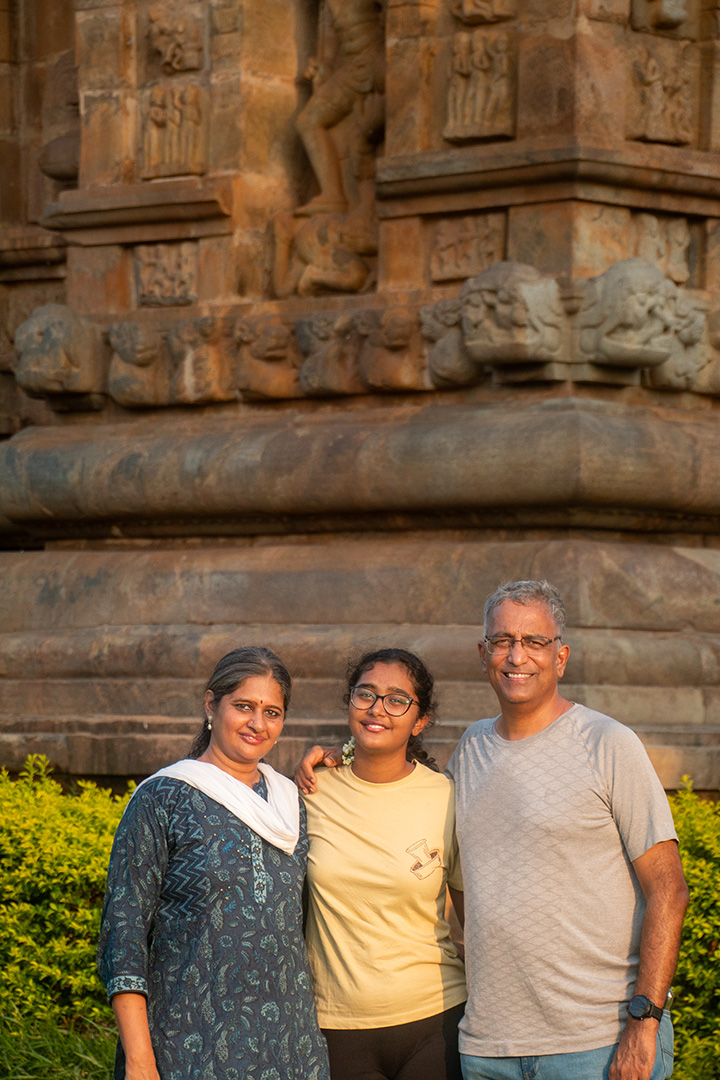
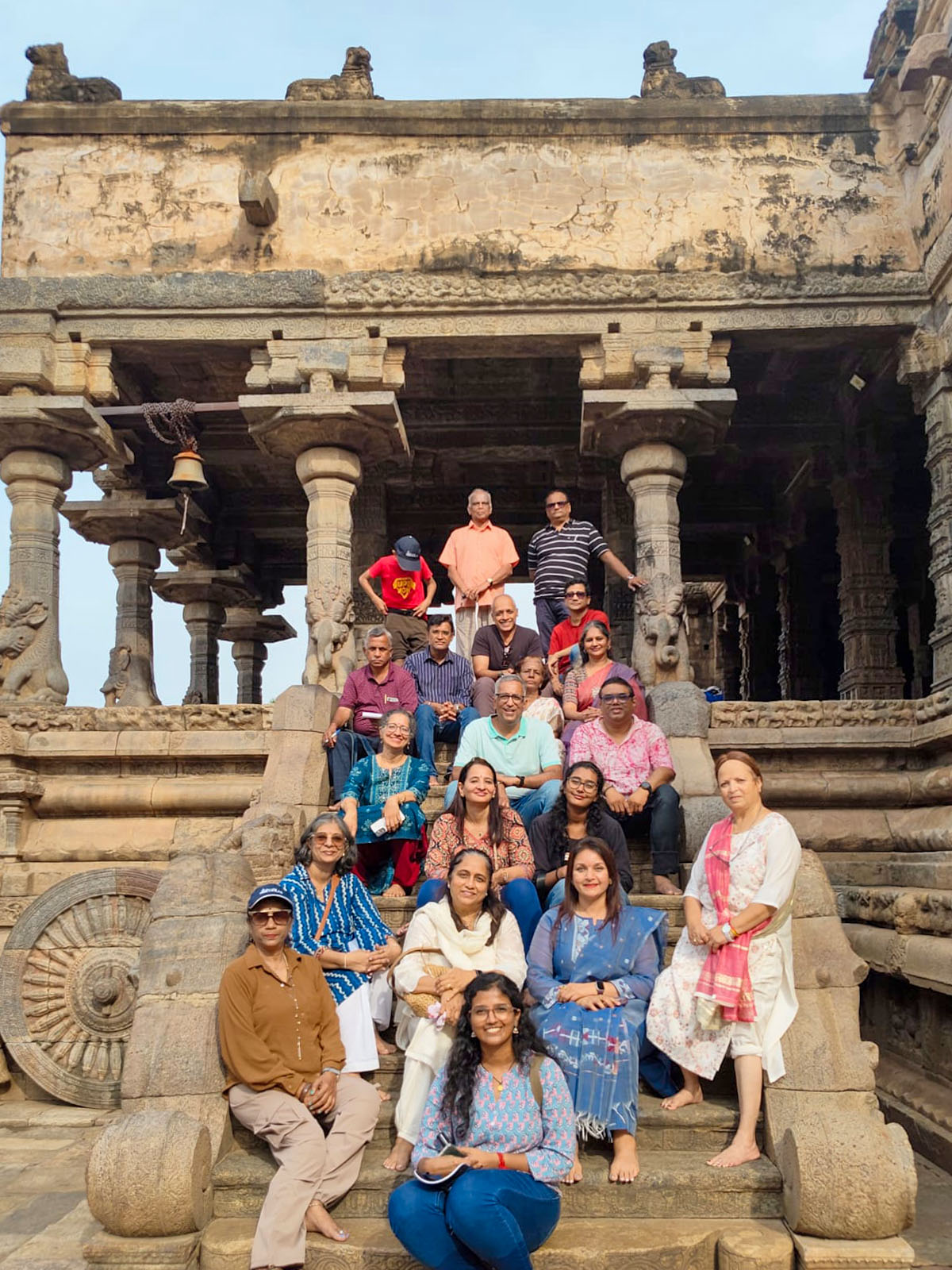
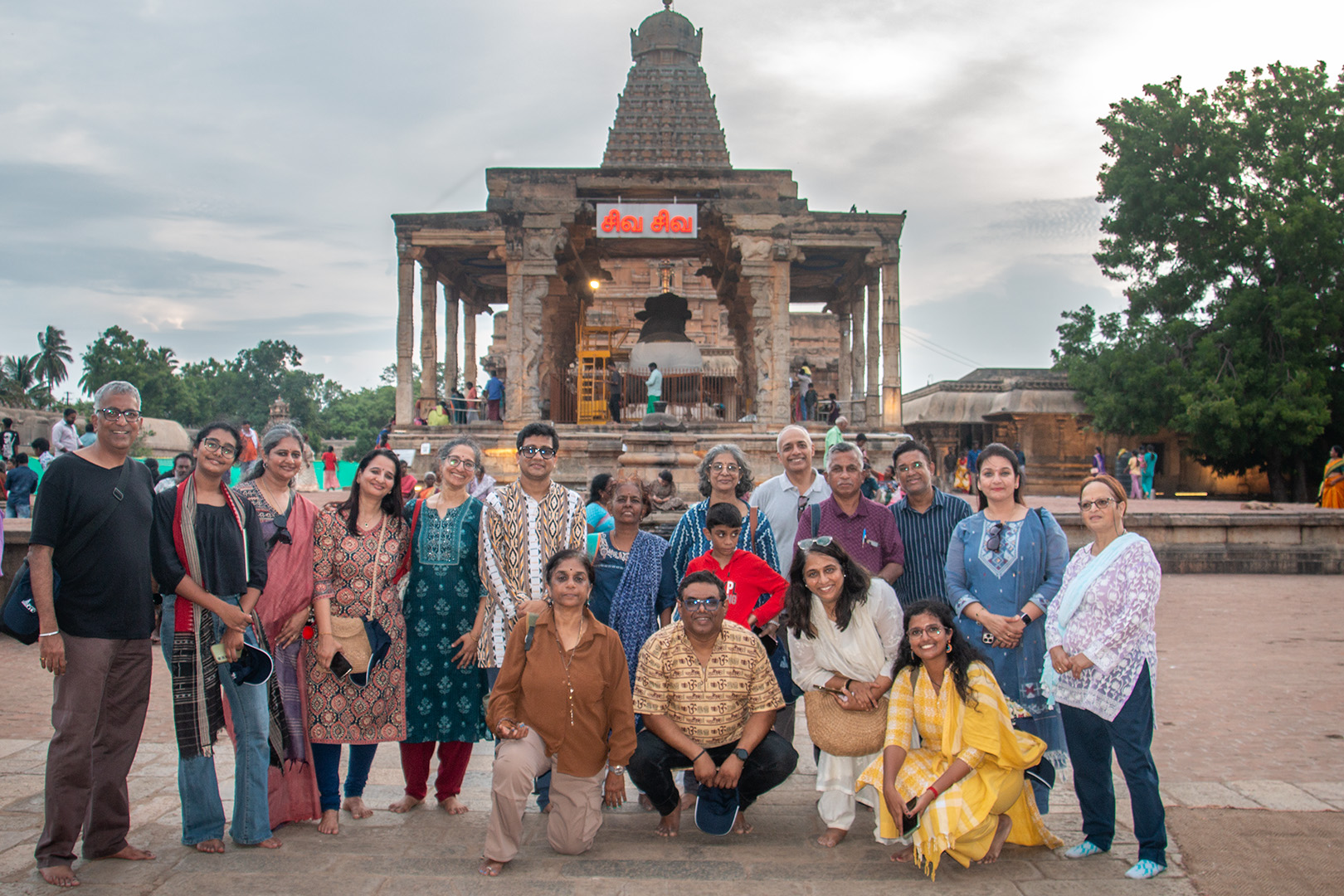
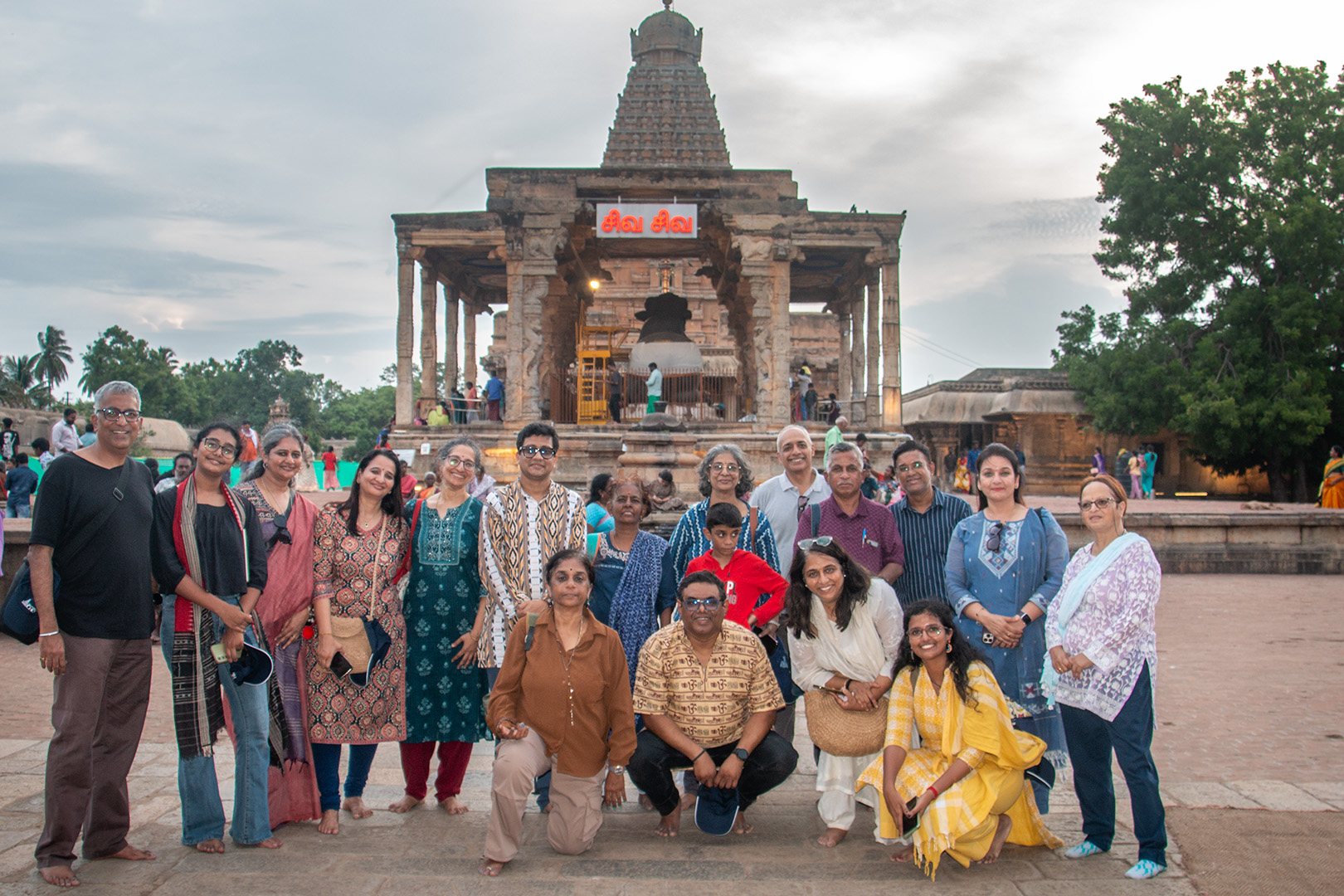
We were a wonderfully mixed group — people from technology, finance, architecture, and several other fields — each carrying a different reason for being there, but united by the same pull toward a thousand-year-old story. Over three days we travelled through Gangaikondacholapuram, Chidambaram, Pazhaiyaarai, Darasuram, and Thanjavur, guided by scholars and historians, and occasionally surprised by village artistes who brought the era back to life after dark. We had the honour of eminent experts like Mr. Deivanayagam and Dr. Ramesh V and were ably guided on the tour by the ever-energetic Darshini.
The Imperial Cholas: A Millennium of Power
The medieval Chola dynasty (circa 850–1279 CE) is one of history’s longest-running royal stories. Beginning with Vijayalaya Chola’s modest rise in the mid-9th century, the line of kings reached its zenith under Emperor Raja Raja Chola I (985–1014 CE) and his son Rajendra Chola I (1012–1044 CE). What sets the Cholas apart from most Indian dynasties is that they were not content ruling within the subcontinent. They built and deployed a powerful navy, won wars overseas, and extended their influence to the Sri Vijaya kingdom in present-day Indonesia and Malaysia — the only Indian dynasty on record to have done so. Closer home, Rajendra Chola’s northern campaign carried Chola arms to the banks of the Ganges, a feat commemorated in the very name of the city he built afterward: Gangaikondacholapuram, “the city of the king who brought the Ganga.”
Their legacy is etched, quite literally, into stone. Hundreds of temples line the Kaveri River basin, their walls inscribed with detailed administrative records, grants, and genealogies — giving historians an unusually rich, self-documented account of an empire that also valued art, dance, and literature as instruments of statecraft.
Their legacy is etched, quite literally, into stone. Hundreds of temples line the Kaveri River basin, their walls inscribed with detailed administrative records, grants, and genealogies — giving historians an unusually rich, self-documented account of an empire that also valued art, dance, and literature as instruments of statecraft.
A Trail of Architectural Marvels
Each stop on the itinerary illuminated a different facet of Chola ambition and craftsmanship.
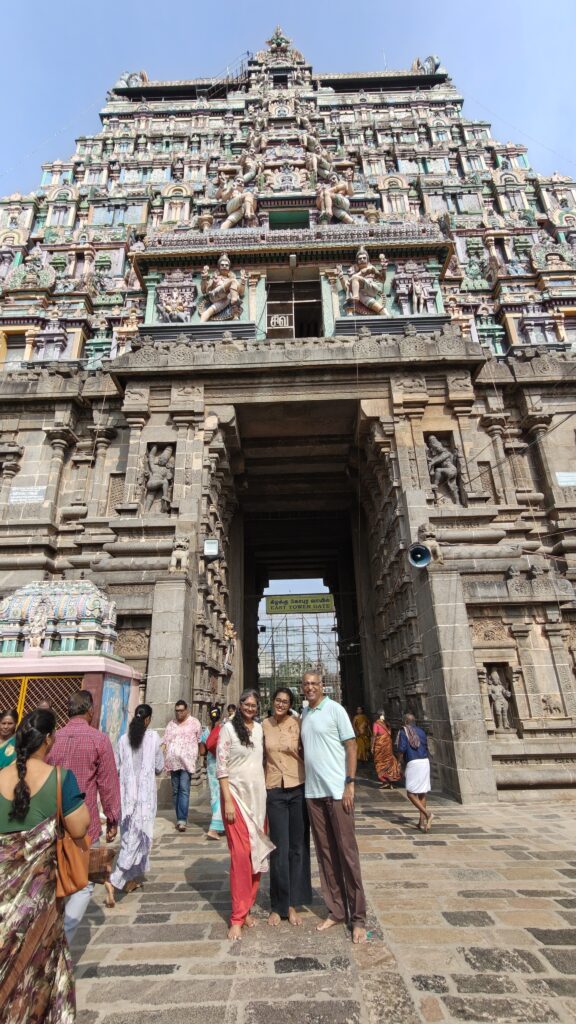
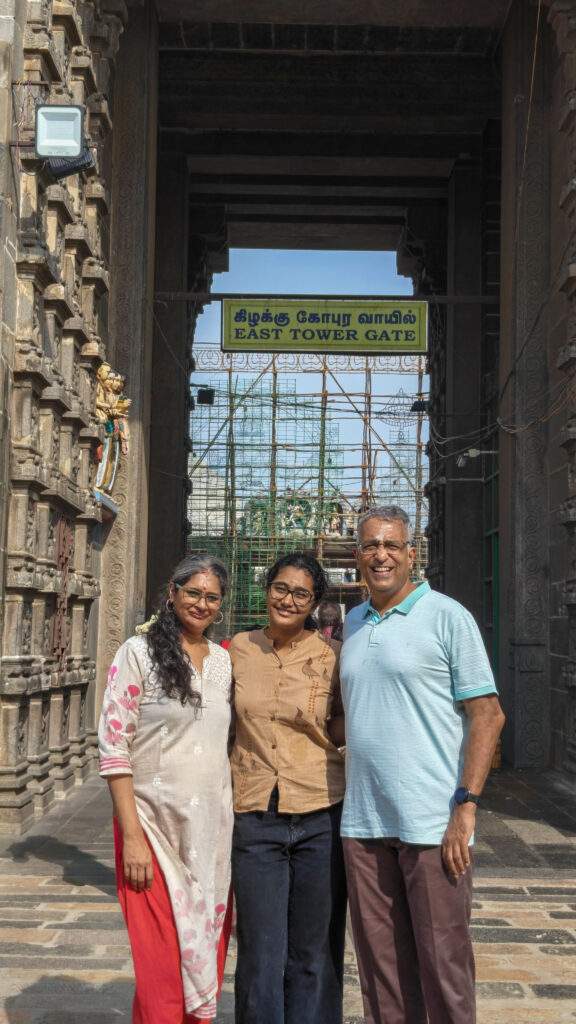
Chidambaram Nataraja Temple
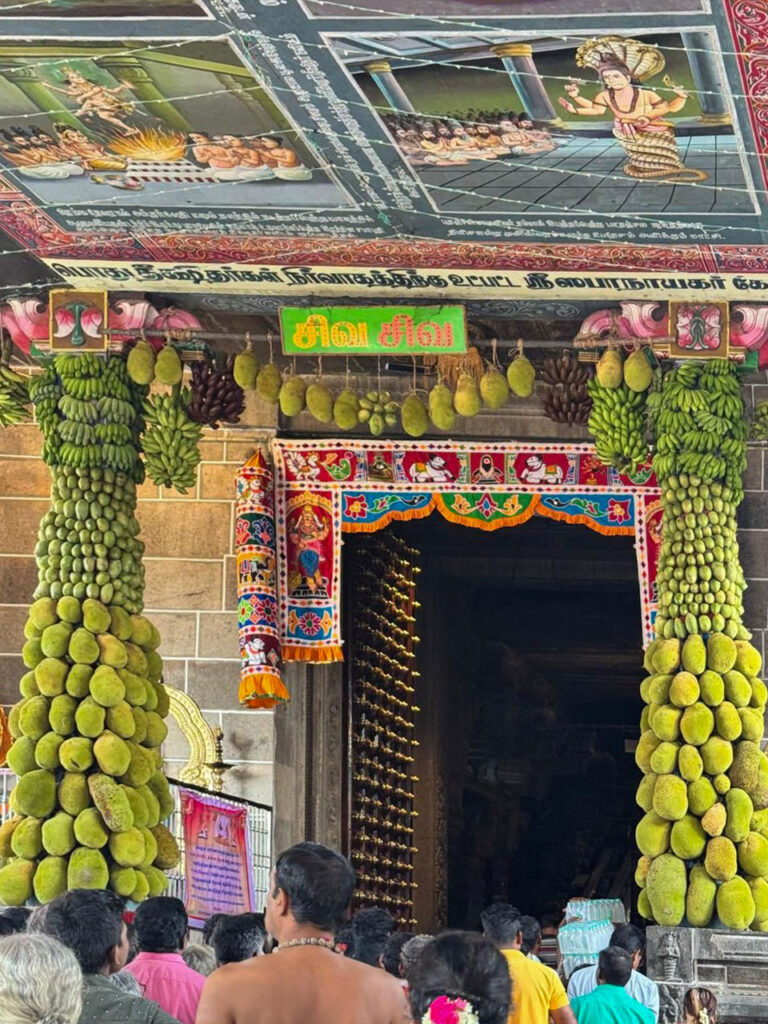
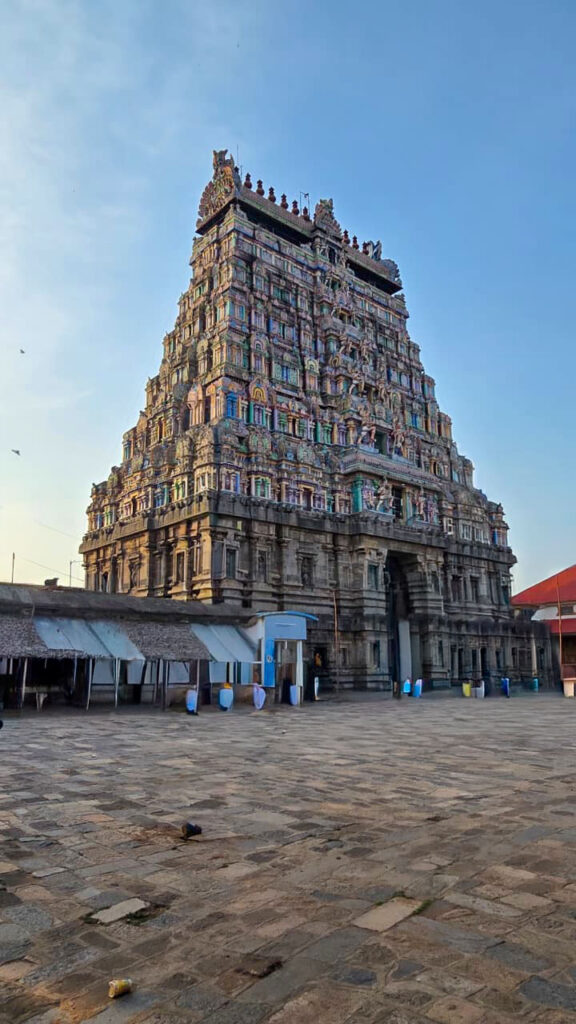
On the second morning we visited the spiritual anchor of the Chola world — the temple of Lord Nataraja, the cosmic dancer who the Cholas regarded as their presiding deity. The temple’s scale and its unusual roof of golden tiles reflect the dynasty’s close identification with Shaivite tradition.
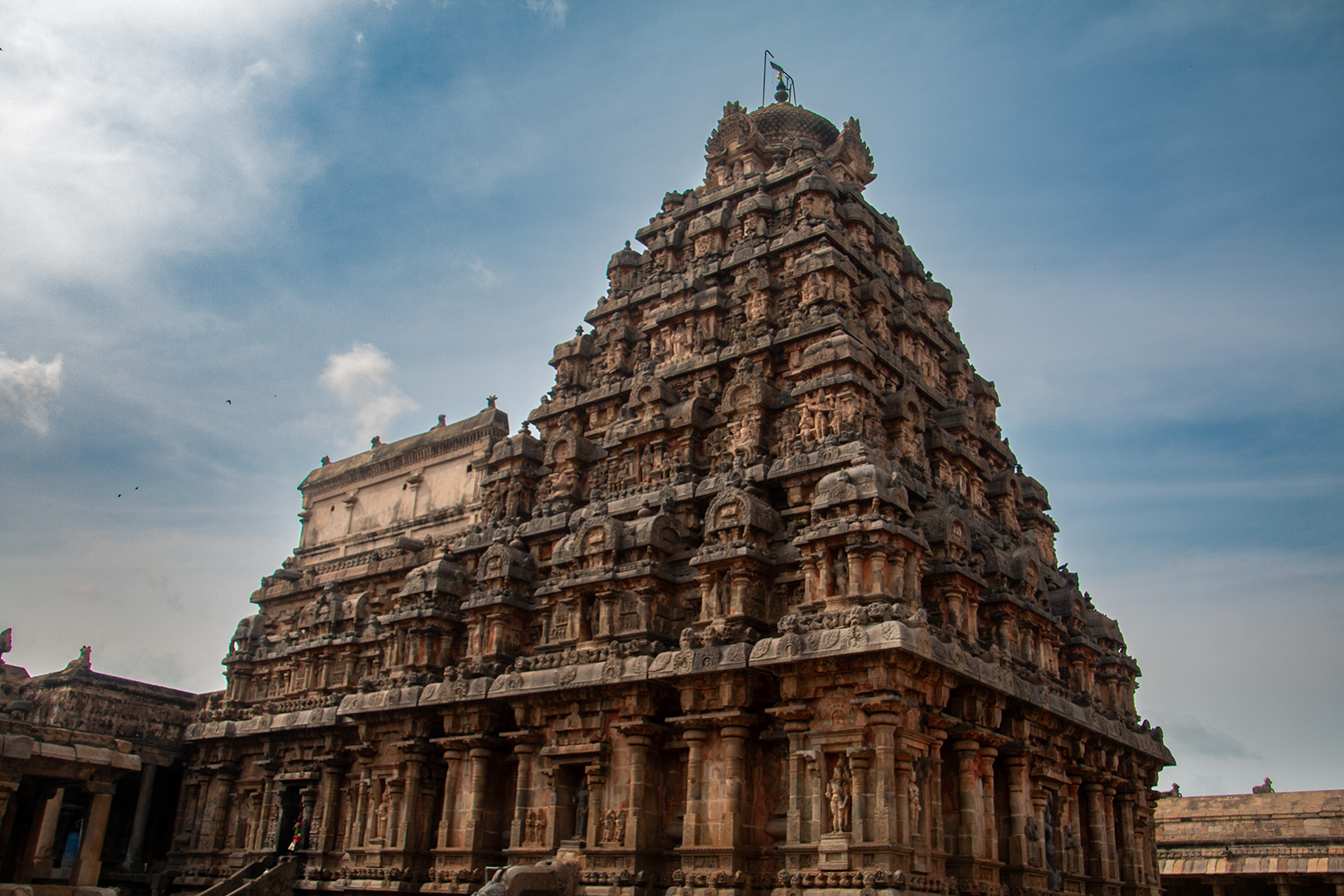
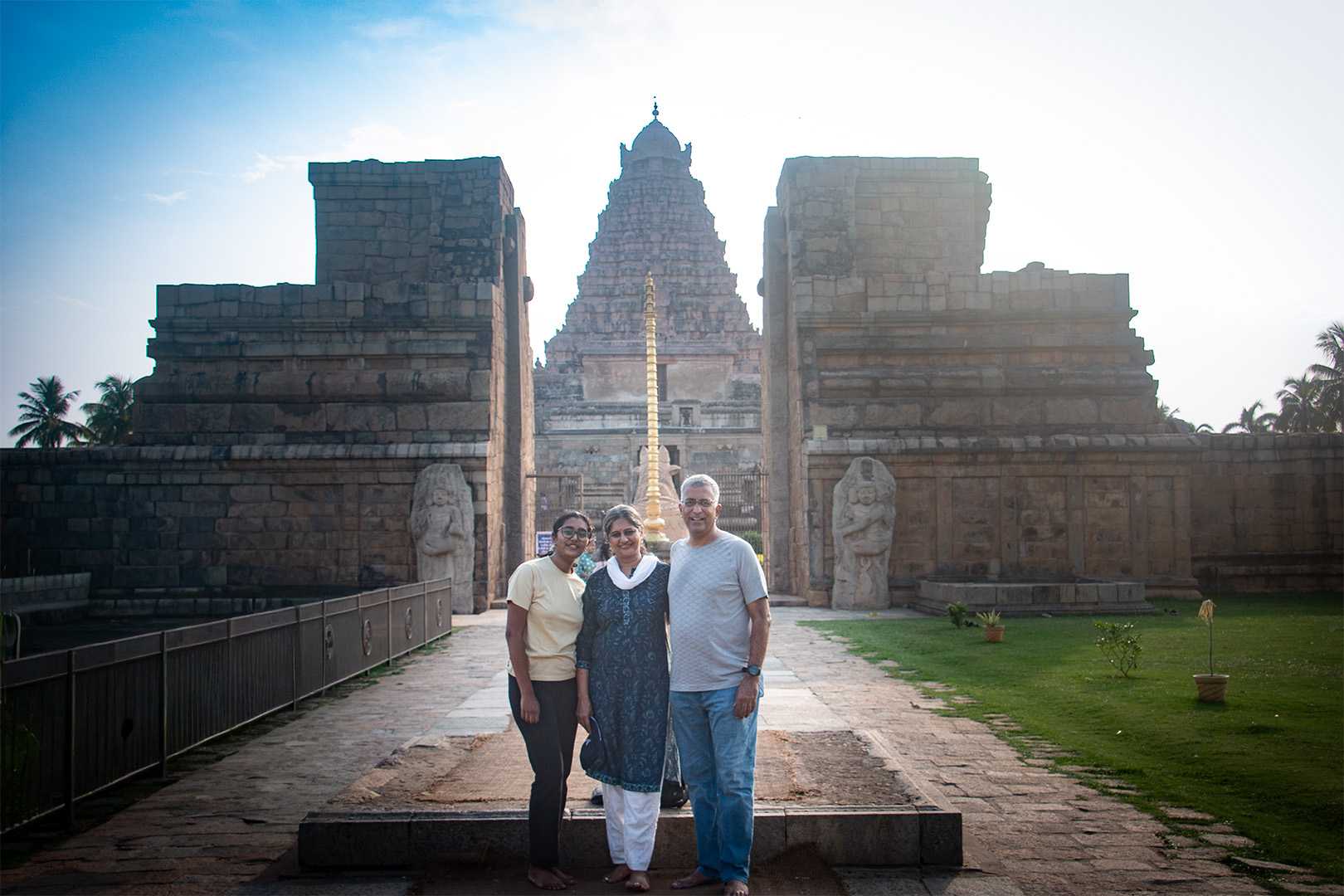
Gangaikondacholapuram
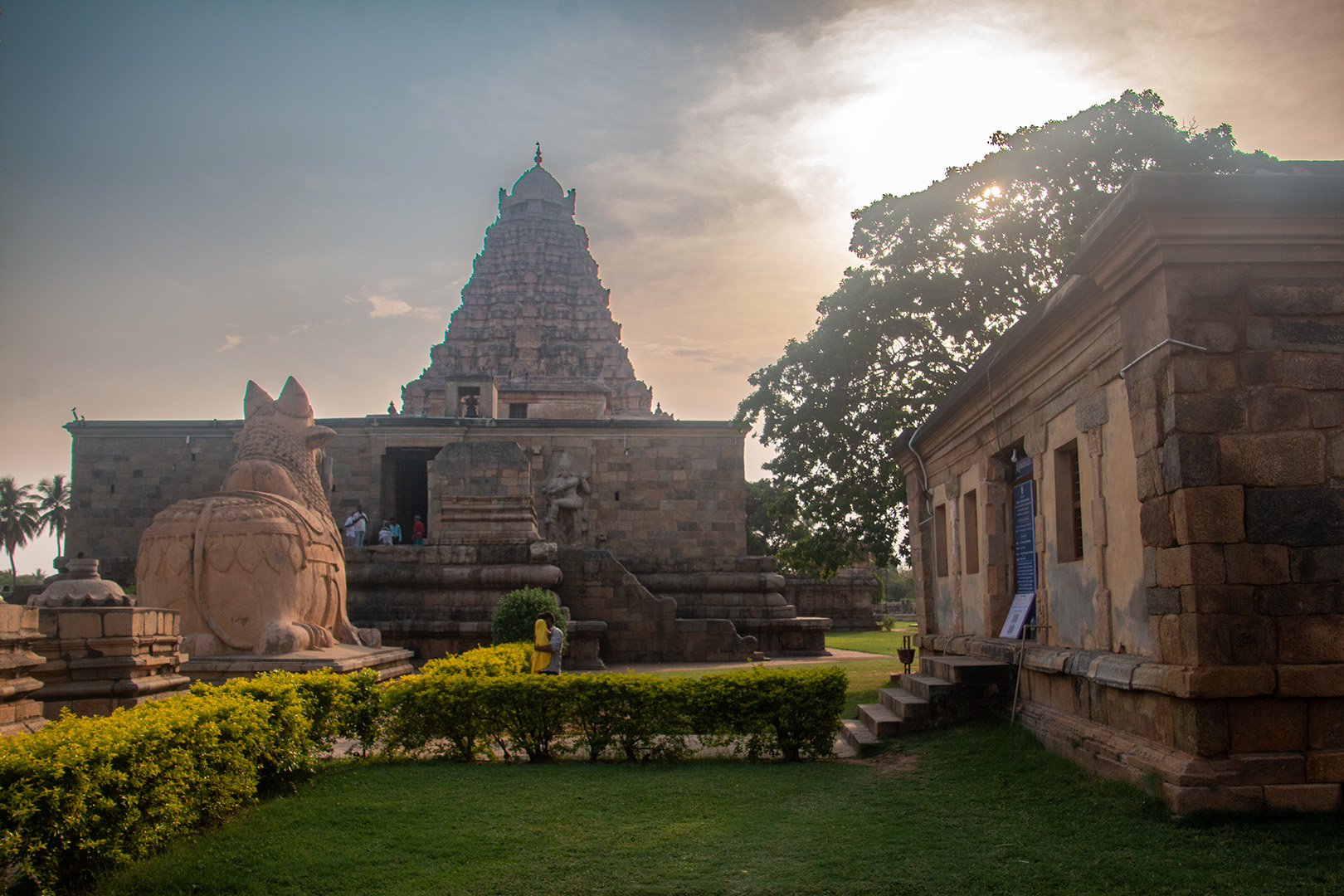
We stood at the city Rajendra Chola I built to commemorate his Gangetic expedition. The Brihadisvara temple here, a UNESCO World Heritage Site, mirrors and rivals its more famous counterpart in Thanjavur, with a softer, more lyrical sculptural style. Excavated remains of the old royal palace nearby, including Chinese ceramics and ivory artefacts, are a quiet reminder of just how far Chola trade networks extended.
Darasuram Airavatesvara Temple
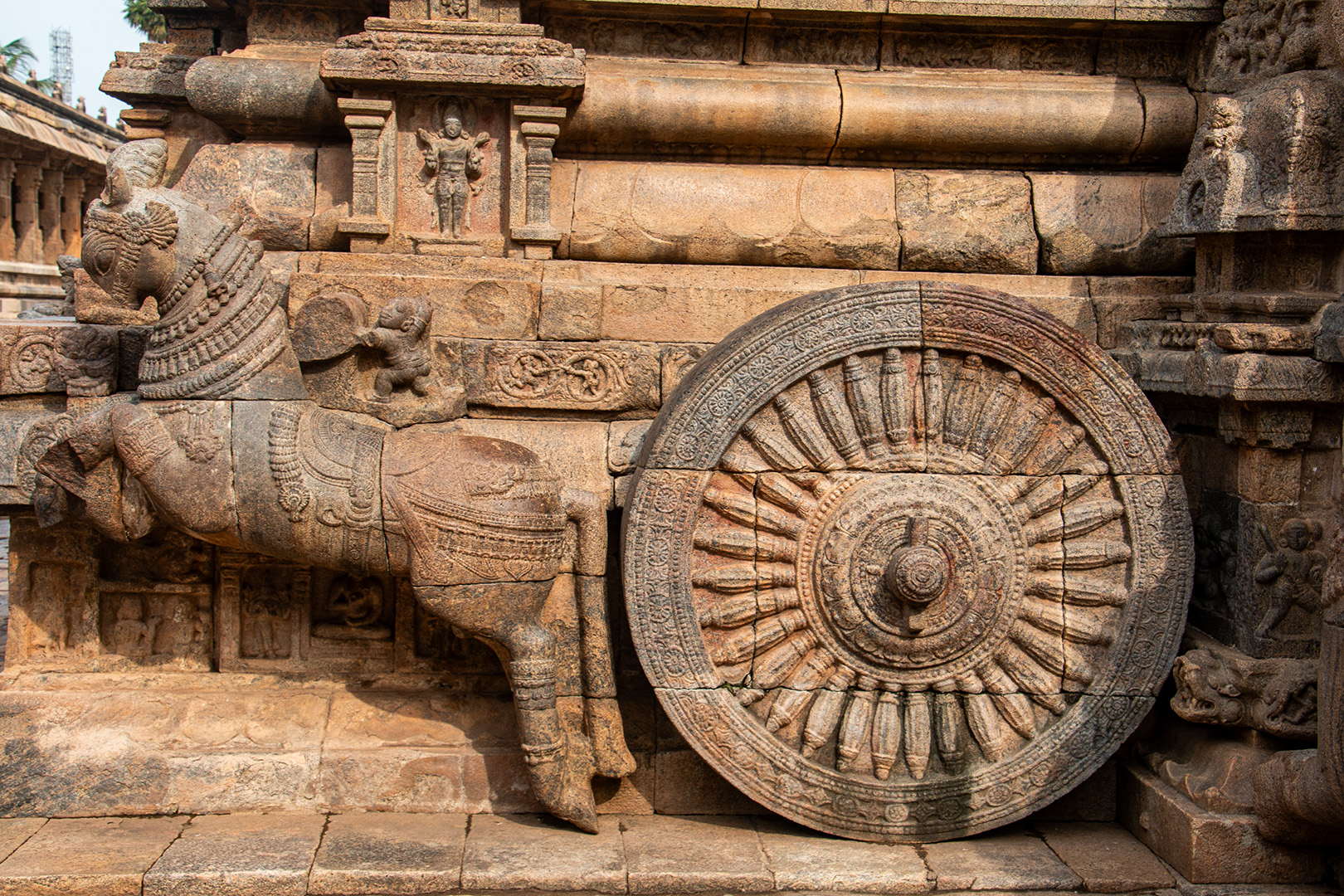
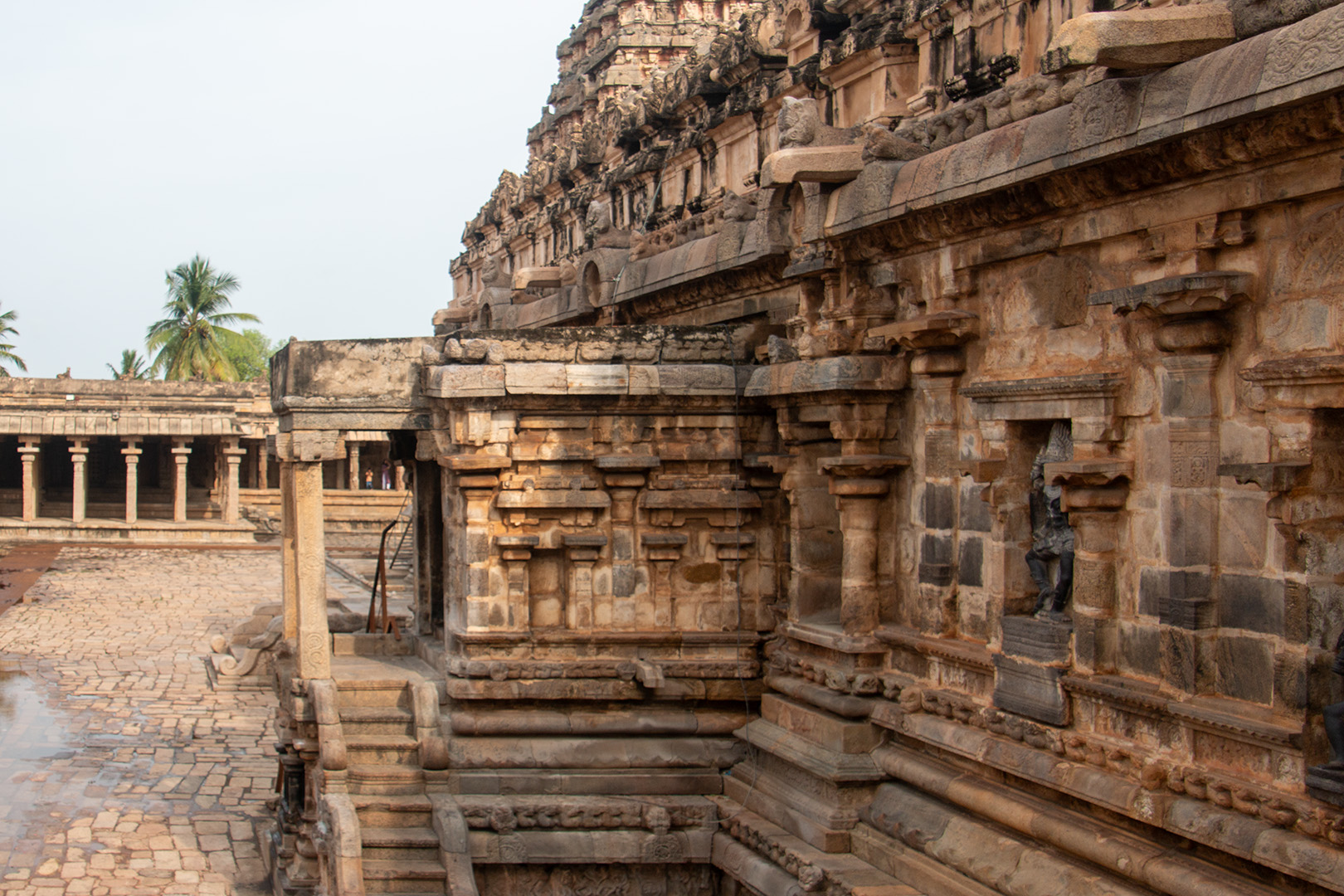
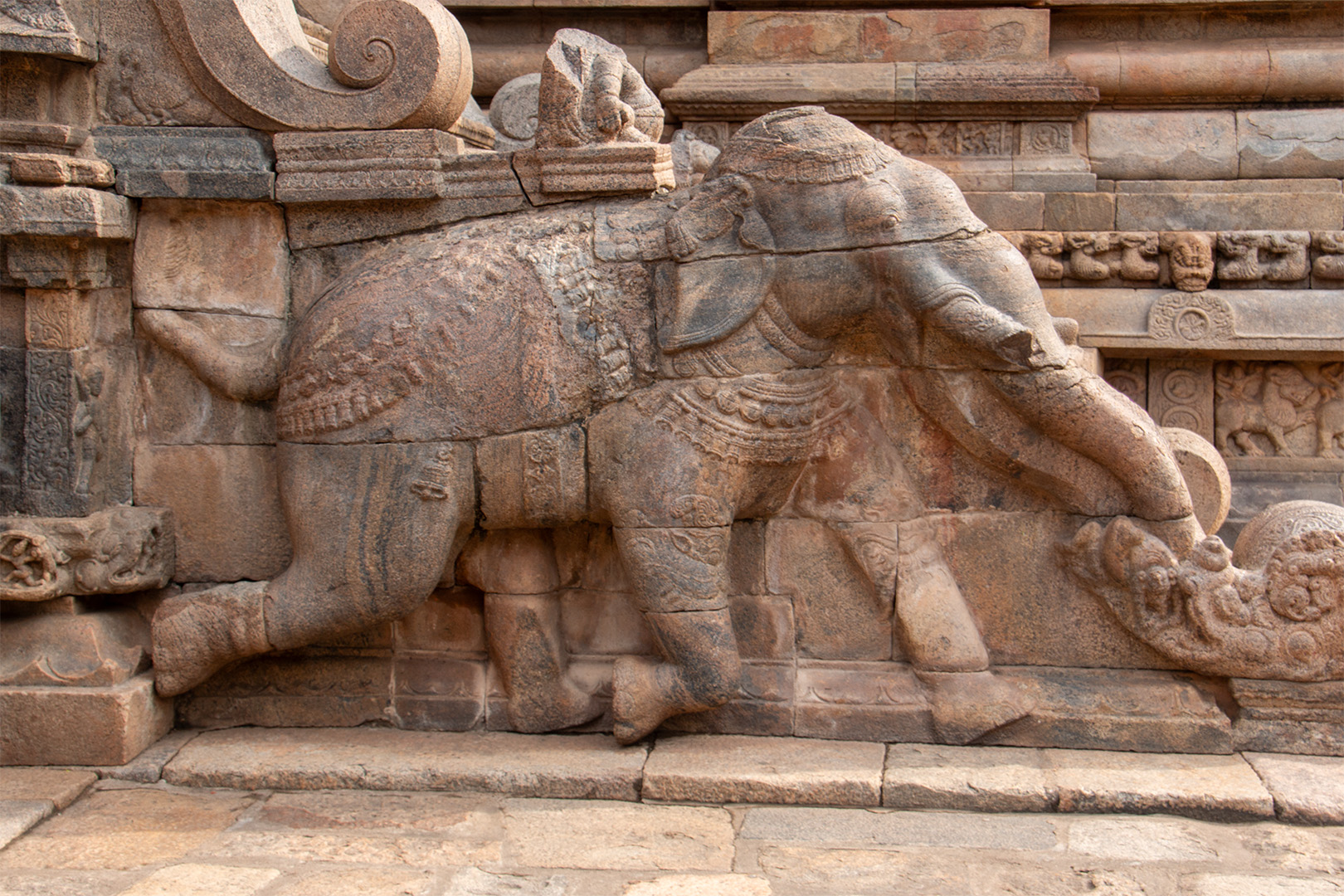
This UNESCO-listed 12th-century temple, built under Rajaraja Chola II, is a masterclass in restraint and detail. Walking through it with an expert archaeologist, we examined sculptural panels of startling realism — figures rendered with an almost photographic sense of movement and expression.
Thanjavur Rajarajeswaram (the Big Temple)
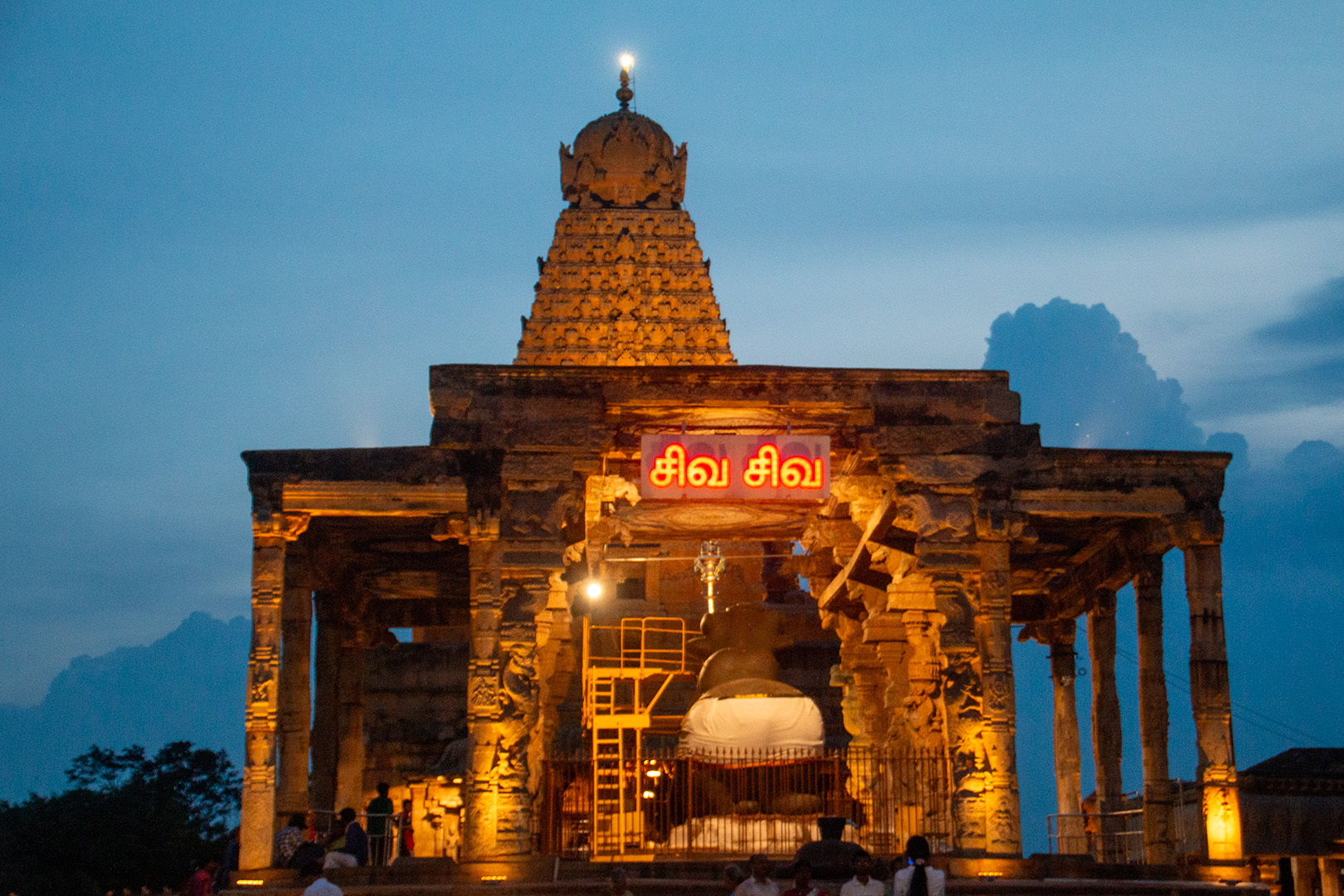
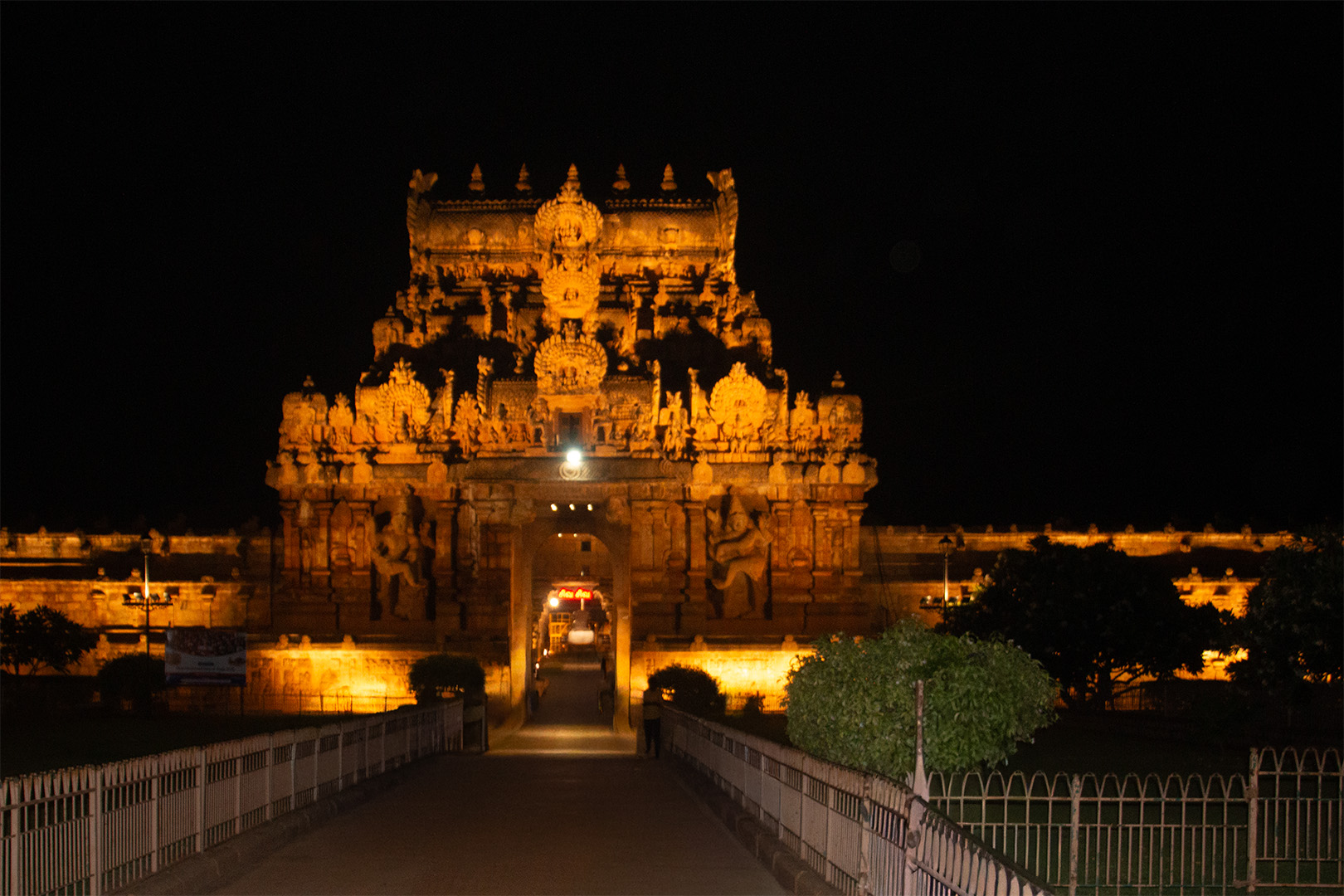
The trip’s grand finale was the Brihadisvara Temple at Thanjavur, built entirely of granite without mortar by Raja Raja Chola I. Its 66-metre vimana and the colossal monolithic Nandi outside remain feats that engineers still find difficult to fully explain. Standing before it at sunset, with our guide tracing Raja Raja’s reign on its walls, was as close as the tour came to feeling like genuine time travel.
Living History: The Surprise of the Stage
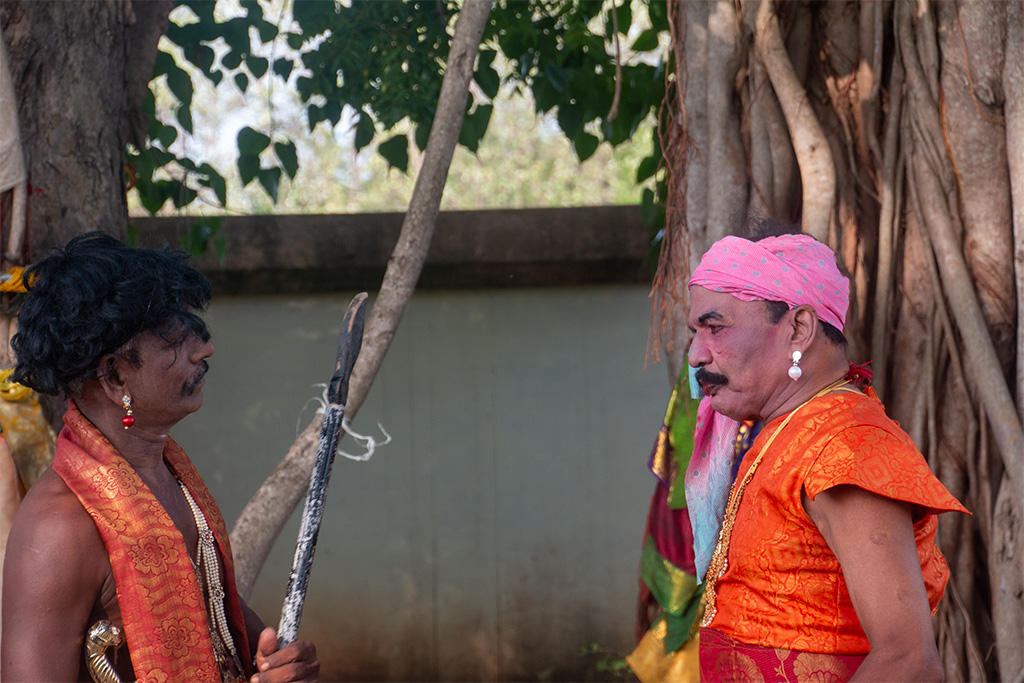
What elevated this trip beyond a conventional monument tour were the “surprise events” staged with local village communities. In specially built amphitheatres after dark, costumed actors brought alive turning points from Chola history — the whispered conspiracy at Kadambur, and the ninth-century battle at Thirupurambiyam that first set the Chola rise in motion. Torch-lit and performed with real intensity, these were less a show and more a transportation — the kind of immersive storytelling that no museum placard can match.
A Management Thought: Marketing Our Own History
Cultural tourism as an economic lever: Sites like Gangaikondacholapuram, Darasuram, and Pazhaiyaarai are UNESCO-grade assets that receive a fraction of the visibility given to monuments in North India or abroad. A coordinated tourism push — better signage, trained guides, immersive trails like “The Spy’s Trail” — could draw both domestic and international travellers to Tamil Nadu and the wider South in far greater numbers.
School curricula need rebalancing: Indian history textbooks need to cover more of the South Indian kingdoms along with the great North Indian empires. The maritime conquests of the Cholas, the administrative sophistication of South Indian dynasties, and the broader story of peninsular India deserve substantially more space in how Indian children learn their own past.
Correcting a quiet myth : India's civilisational story is often told primarily through the lens of invasions and defence of its borders. The Chola naval expeditions to Sri Vijaya (present-day Indonesia and Malaysia) and Rajendra Chola's northern march to the Ganges tell a more complete story — that Indian kingdoms were also capable of ambitious, outward-looking power projection when they had the strategic vision and institutional strength to do so.
The India–China thread, through Buddhism: Chinese court records from the Song dynasty extensively document diplomatic missions from Chola kings, with Buddhism serving as a shared cultural and religious bridge between the two civilisations. This is a soft-power story India could tell far more deliberately on the global stage today.
Standing under the Big Temple’s shadow, it struck me that the Chola playbook — ambitious expansion, heavy investment in institution-building (temples were also banks, employers, and record-keepers), and a genuine openness to the wider world — still holds lessons for how modern India thinks about growth, soft power, and self-confidence on the world stage. A civilisation that built an empire stretching from the Ganges to Sumatra has every reason to tell its story louder.