
The Gulf Intelligence Insights Annual Week 2024, Fujairah, United Arab Emirates
Authored jointly by Ram Narayanan and Nikhil Despande
Key Highlights
The Gulf Intelligence Insights (GI) Annual Week took place amid significant geopolitical tensions and evolving market dynamics. Industry leaders and analysts gathered to discuss and share perspectives, resulting in key highlights and thematic insights from this important conference.
Oil Outlook
The event commenced amid escalating tensions in the Middle East, particularly considering recent military actions by Israel and OPEC+’s, mainly Saudi Arabia’s, decision to maintain existing supply levels. These factors were in the background of a softening global oil demand, driven by lower-than-expected consumption from China. Accordingly, from survey results, Brent crude is projected to hover around $65 - 75 per barrel in the next 12 months. However, in the pursuit of market share growth, oil producers will likely face a reduction in profitability.
The Iranian attack on Israel caused oil prices to jump from $72 to beyond $75 per barrel. This sudden spike altered the direction of the event’s discussions, further emphasising the volatility in global energy markets.
Additionally, industry leaders and analysts highlighted the growing dominance of the Global South in refining capacity, with projections indicating it will lead the sector over the next decade. There was general agreement that Russian Crude flows to Asia have redrawn the world’s oil map.
The Iranian attack on Israel caused oil prices to jump from $72 to beyond $75 per barrel. This sudden spike altered the direction of the event’s discussions, further emphasising the volatility in global energy markets.
Additionally, industry leaders and analysts highlighted the growing dominance of the Global South in refining capacity, with projections indicating it will lead the sector over the next decade. There was general agreement that Russian Crude flows to Asia have redrawn the world’s oil map.
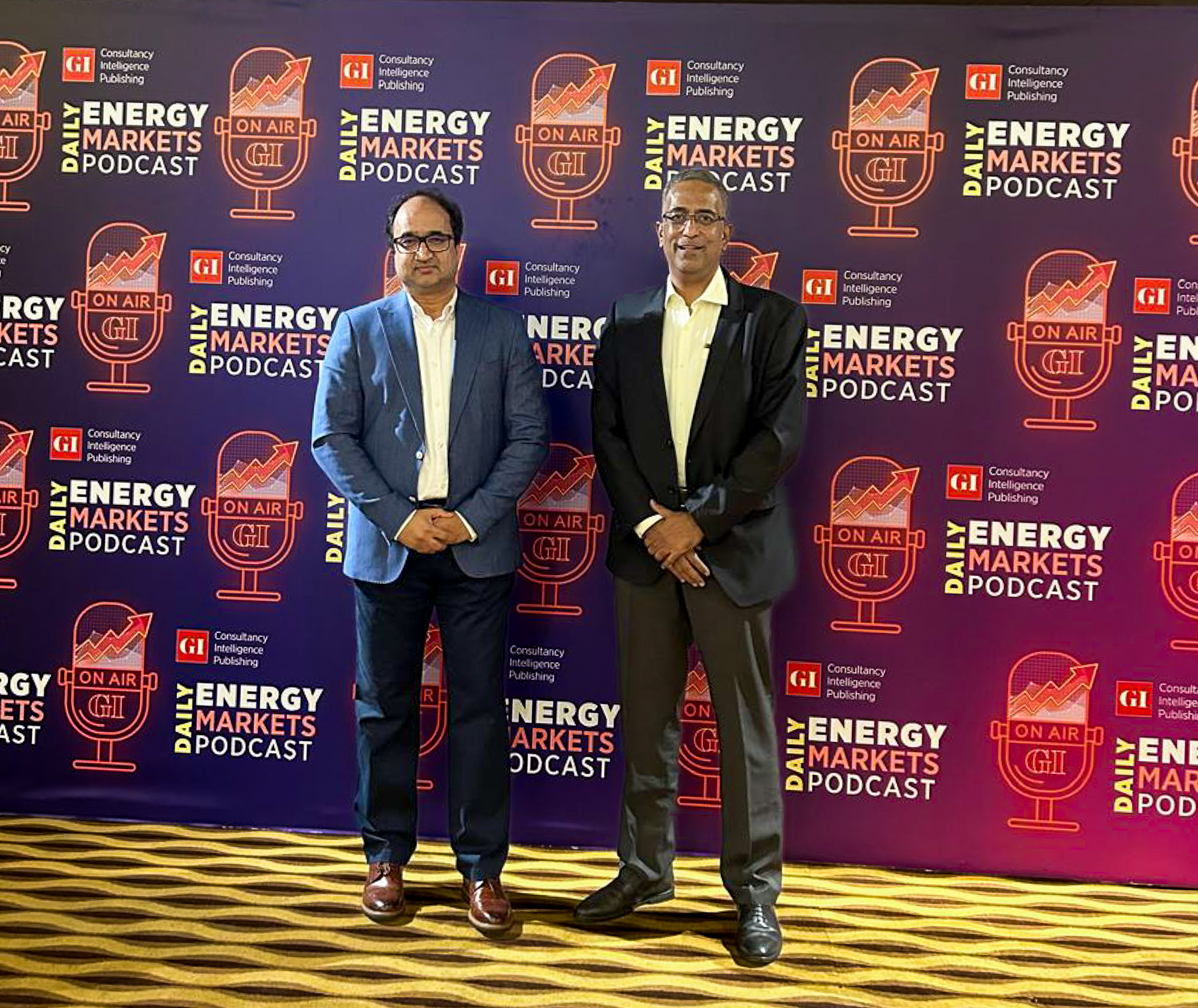
Nikhil Deshpande, Managing Consultant - Downstream & Sustainability Solutions Advisory with Ram Narayanan, VP New Markets - Vedanta
Oil Outlook
The event commenced amid escalating tensions in the Middle East, particularly considering recent military actions by Israel and OPEC+’s, mainly Saudi Arabia’s, decision to maintain existing supply levels. These factors were in the background of a softening global oil demand, driven by lower-than-expected consumption from China. Accordingly, from survey results, Brent crude is projected to hover around $65 - 75 per barrel in the next 12 months. However, in the pursuit of market share growth, oil producers will likely face a reduction in profitability.
The Iranian attack on Israel caused oil prices to jump from $72 to beyond $75 per barrel. This sudden spike altered the direction of the event’s discussions, further emphasising the volatility in global energy markets.
Additionally, industry leaders and analysts highlighted the growing dominance of the Global South in refining capacity, with projections indicating it will lead the sector over the next decade. There was general agreement that Russian Crude flows to Asia have redrawn the world’s oil map.
The Iranian attack on Israel caused oil prices to jump from $72 to beyond $75 per barrel. This sudden spike altered the direction of the event’s discussions, further emphasising the volatility in global energy markets.
Additionally, industry leaders and analysts highlighted the growing dominance of the Global South in refining capacity, with projections indicating it will lead the sector over the next decade. There was general agreement that Russian Crude flows to Asia have redrawn the world’s oil map.
Nikhil Deshpande, Managing Consultant - Downstream & Sustainability Solutions Advisory with Ram Narayanan, VP New Markets - Vedanta
Key Themes Shaping Energy Markets
Several critical themes were identified as pivotal driving forces in the energy markets:
Energy security
Focus has shifted from increasing production to securing supply chains, especially following the Russia-Ukraine conflict. In the Middle East, supply chains have been further disrupted by the ongoing conflict involving Israel, Hamas, Hezbollah, and the Houthis, with potential for even greater disruptions ahead. But the consensus was that the oil markets are adapting to this disruption.
Affordability
Ensuring the affordability of energy resources remains a critical priority for both developed and developing nations. Rising energy prices risk fuelling inflation, which could trigger further disruptions in the global economy.
Decarbonisation
The path towards reducing carbon emissions is being navigated with careful consideration, balancing environmental objectives with economic realities.
Energy security
Focus has shifted from increasing production to securing supply chains, especially following the Russia-Ukraine conflict. In the Middle East, supply chains have been further disrupted by the ongoing conflict involving Israel, Hamas, Hezbollah, and the Houthis, with potential for even greater disruptions ahead. But the consensus was that the oil markets are adapting to this disruption.
Affordability
Ensuring the affordability of energy resources remains a critical priority for both developed and developing nations. Rising energy prices risk fuelling inflation, which could trigger further disruptions in the global economy.
Decarbonisation
The path towards reducing carbon emissions is being navigated with careful consideration, balancing environmental objectives with economic realities.

Role of Fossil Fuels
Notwithstanding a global shift towards renewable energy, fossil fuels are projected to remain integral to the energy mix for the foreseeable future. Approximately 84% of the current energy composition continues to comprise fossil fuels, a figure that has exhibited remarkable stability over the past decade.
LNG: A Critical Component
Liquefied Natural Gas (LNG) is increasingly viewed not just as a transitional fuel but as an essential part of the global energy mix, driven by greater availability and competitive pricing. Both coal and LNG are expected to maintain significant roles in the global energy landscape. Coal remains a key fuel in developing economies such as India.
North-South Divide
The dynamics of energy politics are increasingly influenced by the North-South divide. Developed nations in the North, which have historically relied on fossil fuels for economic development, advocate for the adoption of higher-cost renewable sources. Conversely, developing nations in the South emphasise the necessity for energy security to foster economic growth and accommodate their burgeoning, youthful populations.
Role of Fossil Fuels
Notwithstanding a global shift towards renewable energy, fossil fuels are projected to remain integral to the energy mix for the foreseeable future. Approximately 84% of the current energy composition continues to comprise fossil fuels, a figure that has exhibited remarkable stability over the past decade.
LNG: A Critical Component
Liquefied Natural Gas (LNG) is increasingly viewed not just as a transitional fuel but as an essential part of the global energy mix, driven by greater availability and competitive pricing. Both coal and LNG are expected to maintain significant roles in the global energy landscape. Coal remains a key fuel in developing economies such as India.
North-South Divide
The dynamics of energy politics are increasingly influenced by the North-South divide. Developed nations in the North, which have historically relied on fossil fuels for economic development, advocate for the adoption of higher-cost renewable sources. Conversely, developing nations in the South emphasise the necessity for energy security to foster economic growth and accommodate their burgeoning, youthful populations.
Key Factors Influencing Energy Transition
Several critical factors will play a significant role in shaping the energy transition:
Government financial incentives
Collaboration between the public and private sectors
Resolution of technological constraints
Access to financing for decarbonisation initiatives
Development of carbon credit markets
Advancements in affordable battery storage technologies
Future of Ammonia and Hydrogen
Ammonia and hydrogen are anticipated to follow a trajectory analogous to that of natural gas in the energy transition, underscoring their potential within future energy systems.
Key Factors Influencing Energy Transition
Several critical factors will play a significant role in shaping the energy transition:
Government financial incentives
Collaboration between the public and private sectors
Resolution of technological constraints
Access to financing for decarbonisation initiatives
Development of carbon credit markets
Advancements in affordable battery storage technologies
Future of Ammonia and Hydrogen
Ammonia and hydrogen are anticipated to follow a trajectory analogous to that of natural gas in the energy transition, underscoring their potential within future energy systems.




From the round table discussions in which we were participants
Interest Rates and Commodity Demand
Insights from a roundtable discussion underscored the minimal correlation between interest rates and the price movements of various commodities. While trading costs have risen due to increased freight and insurance premiums, market demand is predominantly influenced by the economic ecosystems of individual nations rather than solely by fluctuations in interest rates.