Unveiling Digital Transformations in Traditional Industries
Tech-Driven Success
A panel discussion at Symbiosis Institute of Business Management, Pune, India
Digital Transformation is a double edged sword. While on one hand improved customer connect, better efficiencies and improved productivity accrue from increased adoption of digital tools the process should be seen as a business transformation process rather than a software implementation program. Lets see the entire gamut of digital transformation business from practical real life stories
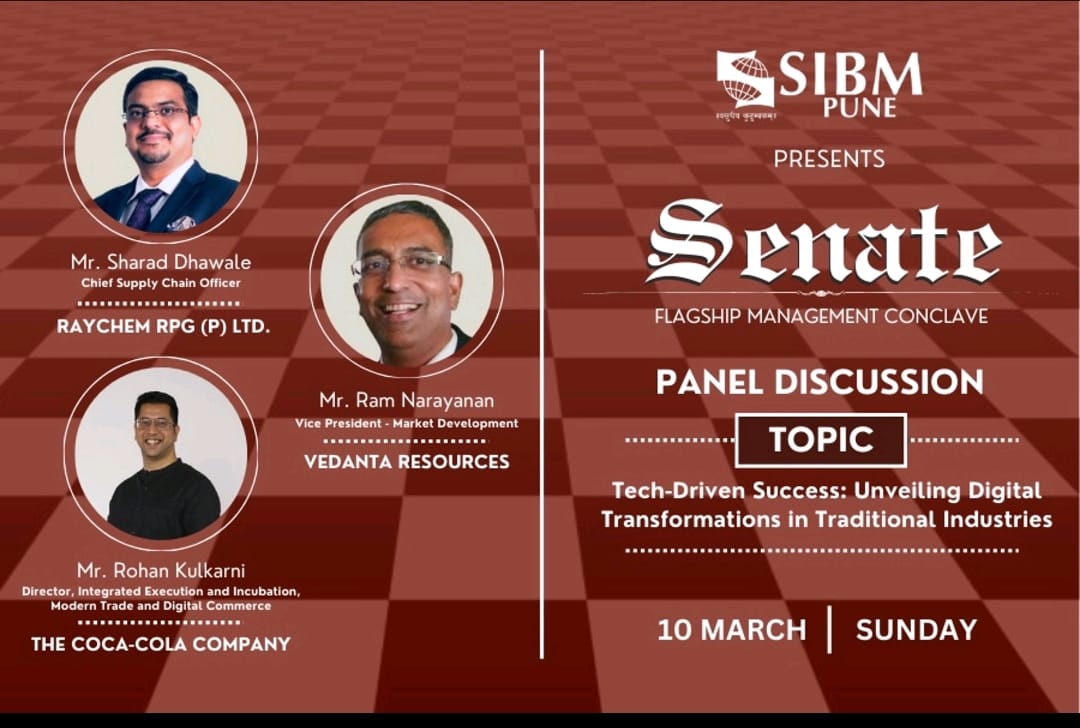
Tech-Driven Success
A panel discussion at Symbiosis Institute of Business Management, Pune, India
Digital Transformation is a double edged sword. While on one hand improved customer connect, better efficiencies and improved productivity accrue from increased adoption of digital tools the process should be seen as a business transformation process rather than a software implementation program. Lets see the entire gamut of digital transformation business from practical real life stories
What are the trends in
Digital Transformation
in core industries?
- Digital transformation has become the backbone of the success in the 21st century and it has transformed the traditional sectors altogether.
- The manufacturing sector has benefitted immensely from the introduction of tech in its operation. According to McKinsey, the introduction of artificial intelligence and machine learning has enabled 30 to 50% reductions in machine downtime, 10 to 30% increases in throughput, 15 to 30% improvements in labour productivity, and 85% more accurate forecasting.
- Digital transformation is high on the agenda for the manufacturing sector and 54% of the companies have implemented artificial intelligence and analytics for business functions, according to a PwC India survey.
- Nearly 70% of manufacturers and industrial entities are actively planning, executing, and implementing digital transformation initiatives in various capacities within their operations.
- According to reports from “Market Research.Com,” the anticipated growth rate of Industry 4.0 in India is projected to reach INR 774.90 billion by FY 2027, expanding at a rate of 13.32% during FY 2023 – FY 2027.
What are the trends in Digital Transformation in core industries?
- Digital transformation has become the backbone of the success in the 21st century and it has transformed the traditional sectors altogether.
- The manufacturing sector has benefitted immensely from the introduction of tech in its operation. According to McKinsey, the introduction of artificial intelligence and machine learning has enabled 30 to 50% reductions in machine downtime, 10 to 30% increases in throughput, 15 to 30% improvements in labour productivity, and 85% more accurate forecasting.
- Digital transformation is high on the agenda for the manufacturing sector and 54% of the companies have implemented artificial intelligence and analytics for business functions, according to a PwC India survey.
- Nearly 70% of manufacturers and industrial entities are actively planning, executing, and implementing digital transformation initiatives in various capacities within their operations.
- According to reports from “Market Research.Com,” the anticipated growth rate of Industry 4.0 in India is projected to reach INR 774.90 billion by FY 2027, expanding at a rate of 13.32% during FY 2023 – FY 2027.
What are the key
digital transformation
interventions in the manufacturing sector?
- Digital transformation has become the backbone of the success in the 21st century and it has transformed the traditional sectors altogether.
- The manufacturing sector has benefitted immensely from the introduction of tech in its operation. According to McKinsey, the introduction of artificial intelligence and machine learning has enabled 30 to 50% reductions in machine downtime, 10 to 30% increases in throughput, 15 to 30% improvements in labour productivity, and 85% more accurate forecasting.
- Digital transformation is high on the agenda for the manufacturing sector and 54% of the companies have implemented artificial intelligence and analytics for business functions, according to a PwC India survey.
- Nearly 70% of manufacturers and industrial entities are actively planning, executing, and implementing digital transformation initiatives in various capacities within their operations.
- According to reports from “Market Research.Com,” the anticipated growth rate of Industry 4.0 in India is projected to reach INR 774.90 billion by FY 2027, expanding at a rate of 13.32% during FY 2023 – FY 2027.
What are the key digital transformation interventions in the manufacturing sector?
- Digital transformation has become the backbone of the success in the 21st century and it has transformed the traditional sectors altogether.
- The manufacturing sector has benefitted immensely from the introduction of tech in its operation. According to McKinsey, the introduction of artificial intelligence and machine learning has enabled 30 to 50% reductions in machine downtime, 10 to 30% increases in throughput, 15 to 30% improvements in labour productivity, and 85% more accurate forecasting.
- Digital transformation is high on the agenda for the manufacturing sector and 54% of the companies have implemented artificial intelligence and analytics for business functions, according to a PwC India survey.
- Nearly 70% of manufacturers and industrial entities are actively planning, executing, and implementing digital transformation initiatives in various capacities within their operations.
- According to reports from “Market Research.Com,” the anticipated growth rate of Industry 4.0 in India is projected to reach INR 774.90 billion by FY 2027, expanding at a rate of 13.32% during FY 2023 – FY 2027.
What are the tools
currently being used
in the manufacturing sector?
- IoT and Sensors: The Internet of Things and sensors have improved traditional manufacturing capabilities. The accuracy of data and automation has improved the decision-making process and supported predictive maintenance.
- Data analytics and AI: This has enabled better data processing, which has resulted in a reduction of error drastically. Companies are using the technology to forecast demand, track logistics, and derive better insights.
- Automation and Robotics: Driving forces for any organisation providing efficiency, speed, and precision while minimising human error and maximising output.
- Cloud Computing: This has expanded the accessibility of data to a massive scale with real-time updates.
- Blockchain:
- Blockchain has solved many critical problems associated with the metal and mining sector. Some of the biggest concerns related to mining have been how we source our raw material, also known as responsible mining, and emissions related to the processing of metals.
- The characteristics of blockchain to provide authentication, transparency, and security are helping mining companies to validate their operations. Through the blockchain, a mining company can authenticate the supply chain information to the customers.
- De Beers Group, one of the major diamond producers have launched a platform that uses blockchain that starts at the source and provides tamper-proof source assurance at scale, enabling sight holders to provide an immutable record of a diamond’s provenance, and empowering jewellery retailers to have confidence in the origin of the diamonds they purchase.
- Rio Tinto has also adopted blockchain to validate the authenticity of the green aluminium produced by the company.
What are the tools currently being used in the manufacturing sector?
- IoT and Sensors: The Internet of Things and sensors have improved traditional manufacturing capabilities. The accuracy of data and automation has improved the decision-making process and supported predictive maintenance.
- Data analytics and AI: This has enabled better data processing, which has resulted in a reduction of error drastically. Companies are using the technology to forecast demand, track logistics, and derive better insights.
- Automation and Robotics: Driving forces for any organisation providing efficiency, speed, and precision while minimising human error and maximising output.
- Cloud Computing: This has expanded the accessibility of data to a massive scale with real-time updates.
- Blockchain:
- Blockchain has solved many critical problems associated with the metal and mining sector. Some of the biggest concerns related to mining have been how we source our raw material, also known as responsible mining, and emissions related to the processing of metals.
- The characteristics of blockchain to provide authentication, transparency, and security are helping mining companies to validate their operations. Through the blockchain, a mining company can authenticate the supply chain information to the customers.
- De Beers Group, one of the major diamond producers have launched a platform that uses blockchain that starts at the source and provides tamper-proof source assurance at scale, enabling sight holders to provide an immutable record of a diamond’s provenance, and empowering jewellery retailers to have confidence in the origin of the diamonds they purchase.
- Rio Tinto has also adopted blockchain to validate the authenticity of the green aluminium produced by the company.
Challenges in
Digital Transformation
- Cyber Security Concern: With more exposure to the digital space, the integration is becoming more intense. This has made the manufacturing sector more susceptible to the cyberattack threats and attacks.
- Workforce Upskilling: Constant upskilling of the workforce is necessary to leverage the enabled technology. Implementing the technology in operation has also added to the time, effort, and cost of the training and workshops.
- Organizational Capability: Enable digital integration, the organisation is required to have that pre-existing capability or be willing to invest in the development of the capabilities.
- Shift in Workforce: Digital transformation has also been impacting traditional jobs. We have recently witnessed concerns related to generative AI like Chat GPT. With digital transformation, the nature of jobs is also evolving in an amazingly fast pace. So, companies are very mindful at implementing such technologies.
Challenges in Digital Transformation
- Cyber Security Concern: With more exposure to the digital space, the integration is becoming more intense. This has made the manufacturing sector more susceptible to the cyberattack threats and attacks.
- Workforce Upskilling: Constant upskilling of the workforce is necessary to leverage the enabled technology. Implementing the technology in operation has also added to the time, effort, and cost of the training and workshops.
- Organizational Capability: Enable digital integration, the organisation is required to have that pre-existing capability or be willing to invest in the development of the capabilities.
- Shift in Workforce: Digital transformation has also been impacting traditional jobs. We have recently witnessed concerns related to generative AI like Chat GPT. With digital transformation, the nature of jobs is also evolving in an amazingly fast pace. So, companies are very mindful at implementing such technologies.