

Navigating the US-China Rivalry and China’s Peak Oil: How South Asia and the Middle East Adapt to a Shifting Global Order
I was privileged to be a part of 2 sessions with esteemed fellow panellists.

Panel - 1
India and Pakistan navigate the US- China cold war in an increasing 'with us or against us world'
Panel - 2
How should middle east energy producers prepare for China peak oil demand
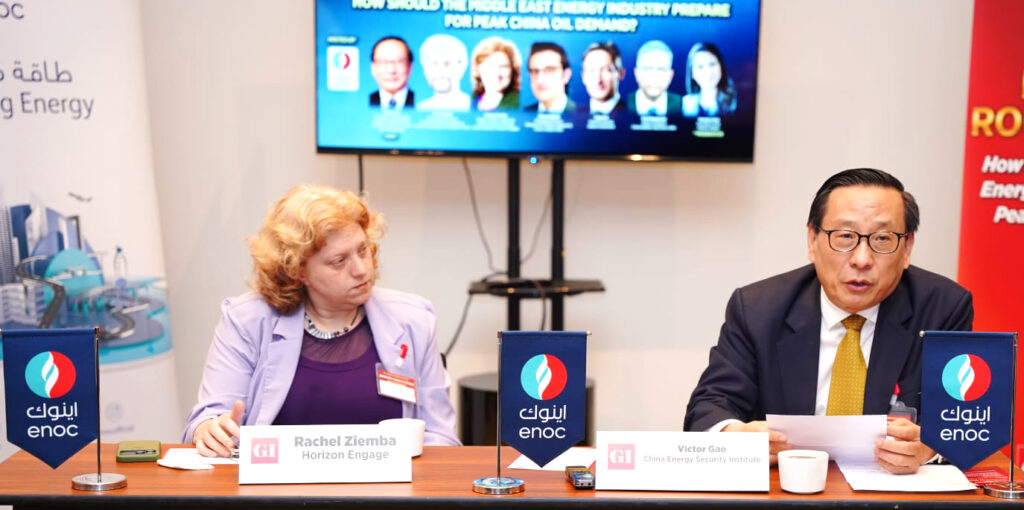



At the Gulf Intelligence Forum in Fujairah, the panel on “How should Middle East players react to China’s peak oil demand?” provided a timely lens to assess how producers, refiners, and policymakers must recalibrate in an era when China’s energy appetite is plateauing.
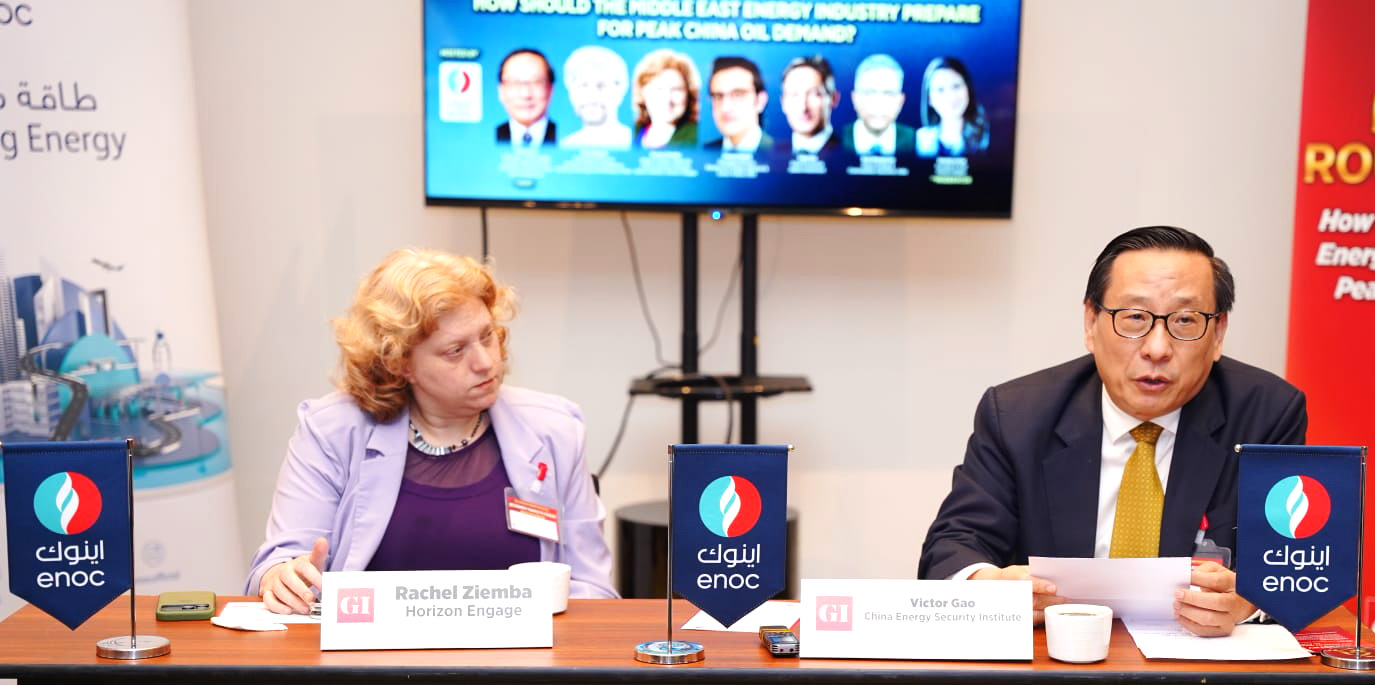
China’s Peak Oil Moment
- China has already reached peak oil demand, stabilizing at around 16 million barrels per day (mmbpd). The structural reasons are clear.
- Electric Vehicles (EVs) have disrupted gasoline growth, while LNG and hydrogen are gradually replacing diesel in heavy transport and industrial use.
- On the petrochemicals front, domestic consumption has underperformed expectations, and the surge in recycled plastics has further dampened virgin polymer demand.
- What was once the world’s most reliable growth engine for crude and refined products has become a mature, efficiency-driven market.
- China has already reached peak oil demand, stabilizing at around 16 million barrels per day (mmbpd). The structural reasons are clear.
- Electric Vehicles (EVs) have disrupted gasoline growth, while LNG and hydrogen are gradually replacing diesel in heavy transport and industrial use.
- On the petrochemicals front, domestic consumption has underperformed expectations, and the surge in recycled plastics has further dampened virgin polymer demand.
- What was once the world’s most reliable growth engine for crude and refined products has become a mature, efficiency-driven market.
The Twin Shifts Reshaping China’s Energy Profile
Two deep, irreversible trends are now defining China’s energy transition:
- Renewable Supremacy:
China has made extraordinary strides in renewable energy generation — particularly solar and wind. The pace of its capacity additions, both in generation and storage, is unmatched globally. This is directly displacing fossil-fuel-based electricity generation. - Feedstock Transition:
The rise of LNG for power and ethane for petrochemical feedstock is changing the structure of China’s hydrocarbon imports. Refiners are optimizing operations and integrating upstream gas and downstream chemicals to protect margins.
Together, these forces mean that incremental oil demand from China is unlikely to rebound, even in the medium term.


Oil Product Exports:
The Quiet Balancing Act
Interestingly, China’s oil product export quota has remained steady at around 60 million tonnes per annum for the last three years. This reflects a deliberate policy choice — to keep domestic refineries running at high utilization and safeguard employment, even as domestic fuel demand flattens. The global implication is unmistakable:
- Chinese refined product exports will continue to exert downward pressure on international crack spreads and margins, especially in Asia.
- For refiners in Singapore, India, and the Gulf, this is a structural reality that will persist well into the late 2020s.
Middle East’s Strategic Response:
From Crude to Molecules
Faced with the prospect of a maturing Chinese crude market, Middle East producers are already adapting. The new playbook is clear:
- Vertical Integration: National oil companies (NOCs) are deepening their downstream footprint — expanding refining, petrochemicals, and specialty chemicals capacity — to capture more value per barrel.
- Regional Refining Hubs: Countries such as Saudi Arabia and the UAE are positioning themselves as export hubs for refined products and petrochemicals, leveraging logistics advantages and integrated industrial zones.
- Portfolio Diversification: Investments in renewables, hydrogen, and circular carbon solutions are complementing traditional hydrocarbons to future-proof national revenues.
The strategic pivot from “crude exporters” to “product and chemical powerhouses” is not merely a hedge against China’s slowdown — it represents a broader redefinition of the Middle East’s role in the global energy matrix.
The China-driven era of oil demand expansion may be drawing to a close, but the age of energy transformation is just beginning. For Middle Eastern producers, the imperative is to align their downstream ambitions with new centers of demand — in Southeast Asia, Africa, and emerging industrial corridors.
In this evolving landscape, resilience will belong to those who can convert barrels into molecules, and molecules into competitive advantage.


