
Deep-Dive
Reflections from the
Gulf Intelligence (GI) Podcast
The conversation spanned geopolitics, energy markets, macroeconomics, and the evolving Asia–Middle East–US dynamic—each carrying significant implications for the global oil balance.
India’s Russian Crude Imports: A Structural Cooling from Late 2025
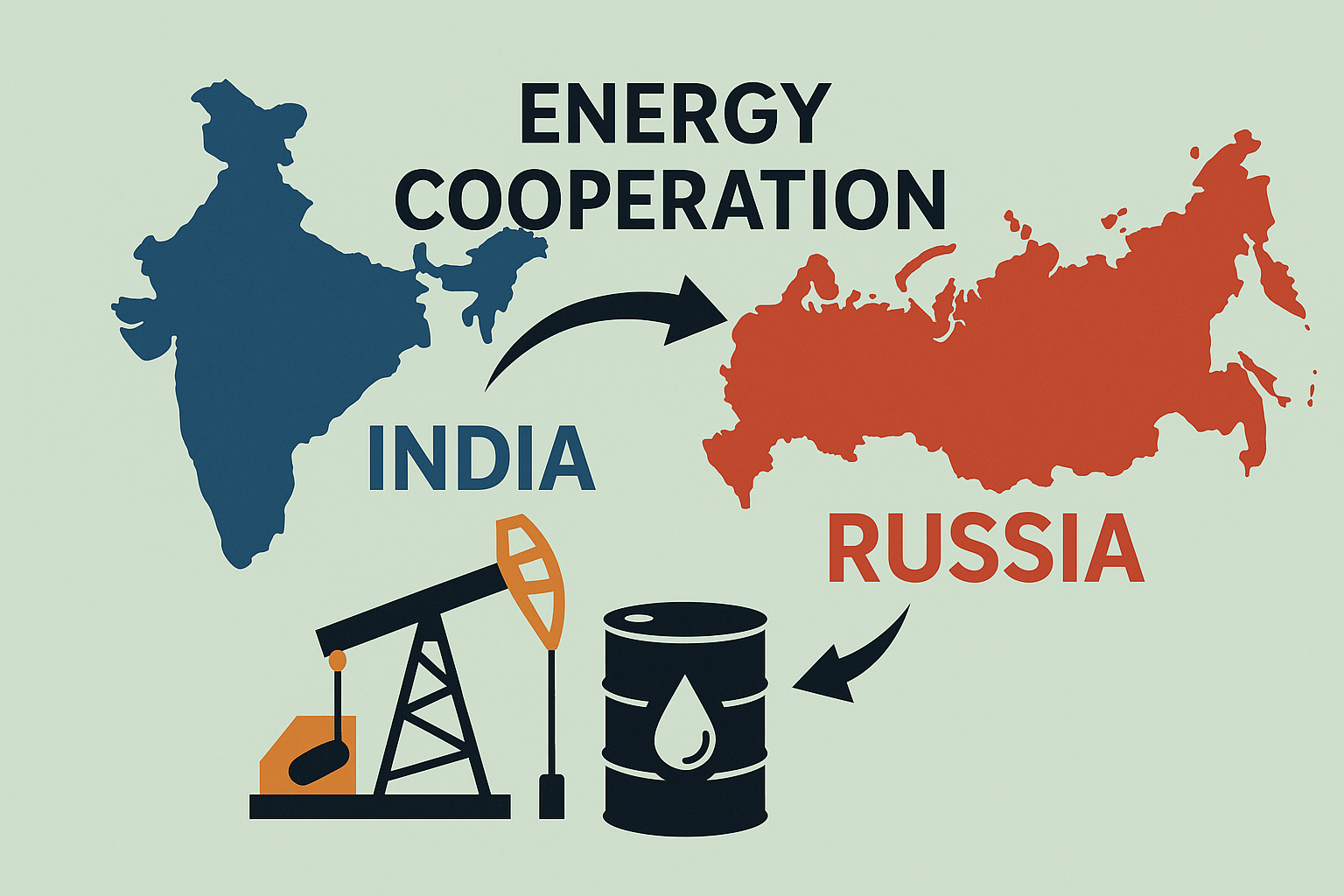
India’s import dependence on discounted Russian crude has been one of the most widely discussed developments since 2022.
However, this trend is likely to soften from November 2025, driven by:
- Sanctions on two major Russian suppliers, which could constrain their ability to transact freely through international shipping, insurance and financial systems.
- A wider pool of available Middle East crude due to OPEC`s moves to ease supplies
- Indian refiners seeking to rebalance their crude basket, partly to reduce supply risk concentration and partly in anticipation of longer-term pricing normalisation.
This does not signal a fundamental shift away from Russian oil but rather a recalibration toward more diversified sourcing.

India–Russia Strategic Equations Remain Robust
Despite evolving crude trade dynamics, the India–Russia relationship is anchored in decades of defence and strategic cooperation.
- Over 60–70% of India’s military hardware continues to have Russian lineage.
- Joint defence production initiatives, missile systems and nuclear cooperation create long-term interdependence.
- Political goodwill built over decades ensures that energy trade disruptions will not materially dent the broader relationship.
Thus, any moderation in crude imports has limited geopolitical implications.
India’s Macro Outlook: A Sweet Spot Amid Global Uncertainty
India continues to demonstrate resilience and momentum—even as several major economies face tightening conditions.
Key tailwinds include:
- GST rate rationalisation, which provides stimulus to consumption-facing sectors.
- The anticipated India–US trade deal, which could unlock new avenues for high-tech manufacturing, services, supply-chain relocation and agricultural market access.
- A robust domestic demand cycle driven by investment, rising disposable incomes, and an improving business climate.
These factors collectively position India as one of the most promising large economies for 2025–26.
China Has Reached Peak Oil Demand —The Shift Is Structural
India continues to demonstrate resilience and momentum—even as several major economies face tightening conditions.
Key tailwinds include:
- GST rate rationalisation, which provides stimulus to consumption-facing sectors.
- The anticipated India–US trade deal, which could unlock new avenues for high-tech manufacturing, services, supply-chain relocation and agricultural market access.
- A robust domestic demand cycle driven by investment, rising disposable incomes, and an improving business climate.
These factors collectively position India as one of the most promising large economies for 2025–26.
China’s Net Oil Demand Will Likely Decline from 2026
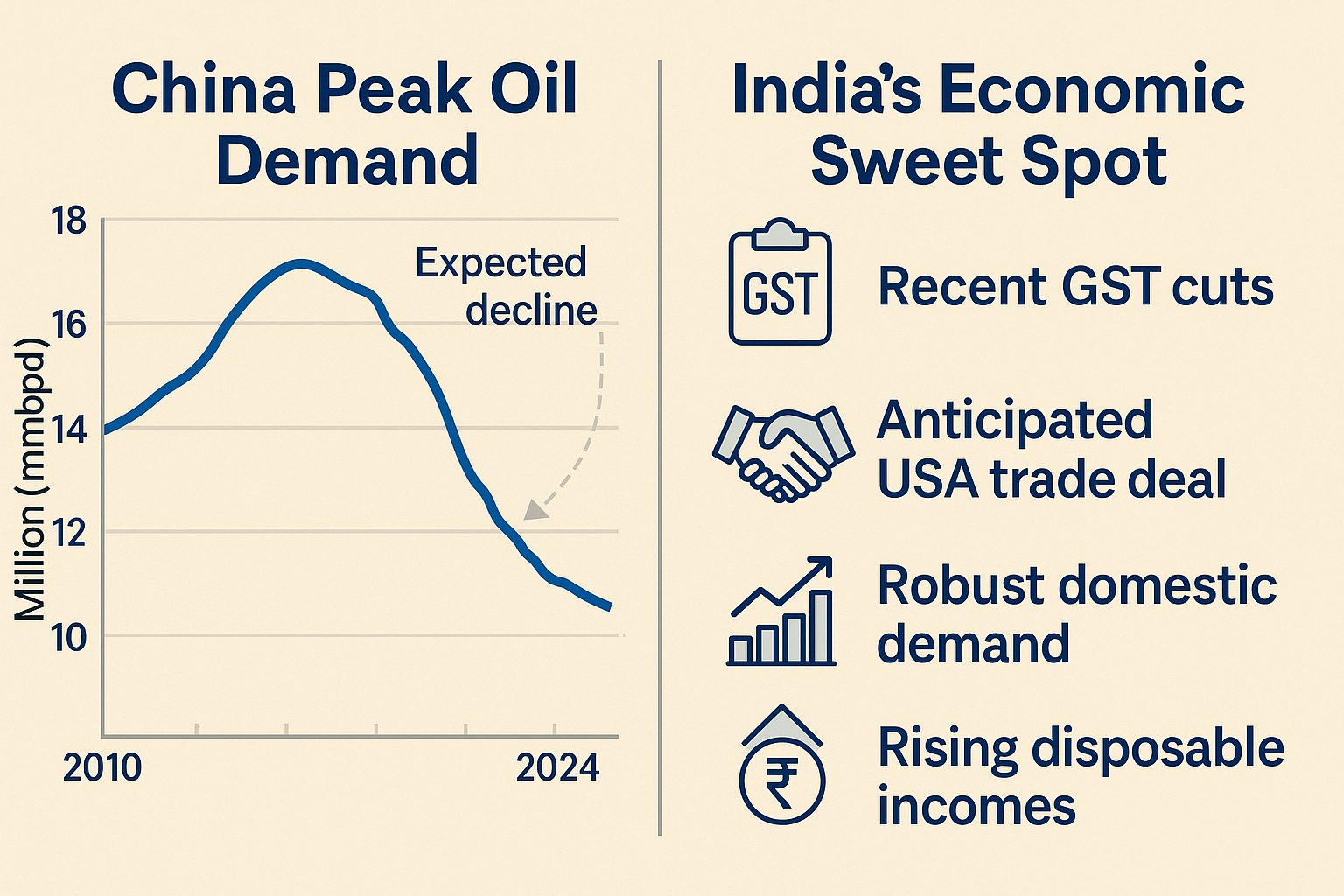
Looking ahead, China’s demand trajectory has several headwinds:
- Slowing economic growth, with a shift toward consumption rather than heavy industry.
- An ageing demographic, reducing structural energy intensity.
- Accelerated renewable build-out, with solar and wind additions breaking global records.
- Policy pushes for electrification in transport, heating and light industry.
As these drivers converge, China’s net oil demand is expected to begin declining from 2026, fundamentally altering global demand projections and OPEC planning scenarios.